


Introduction
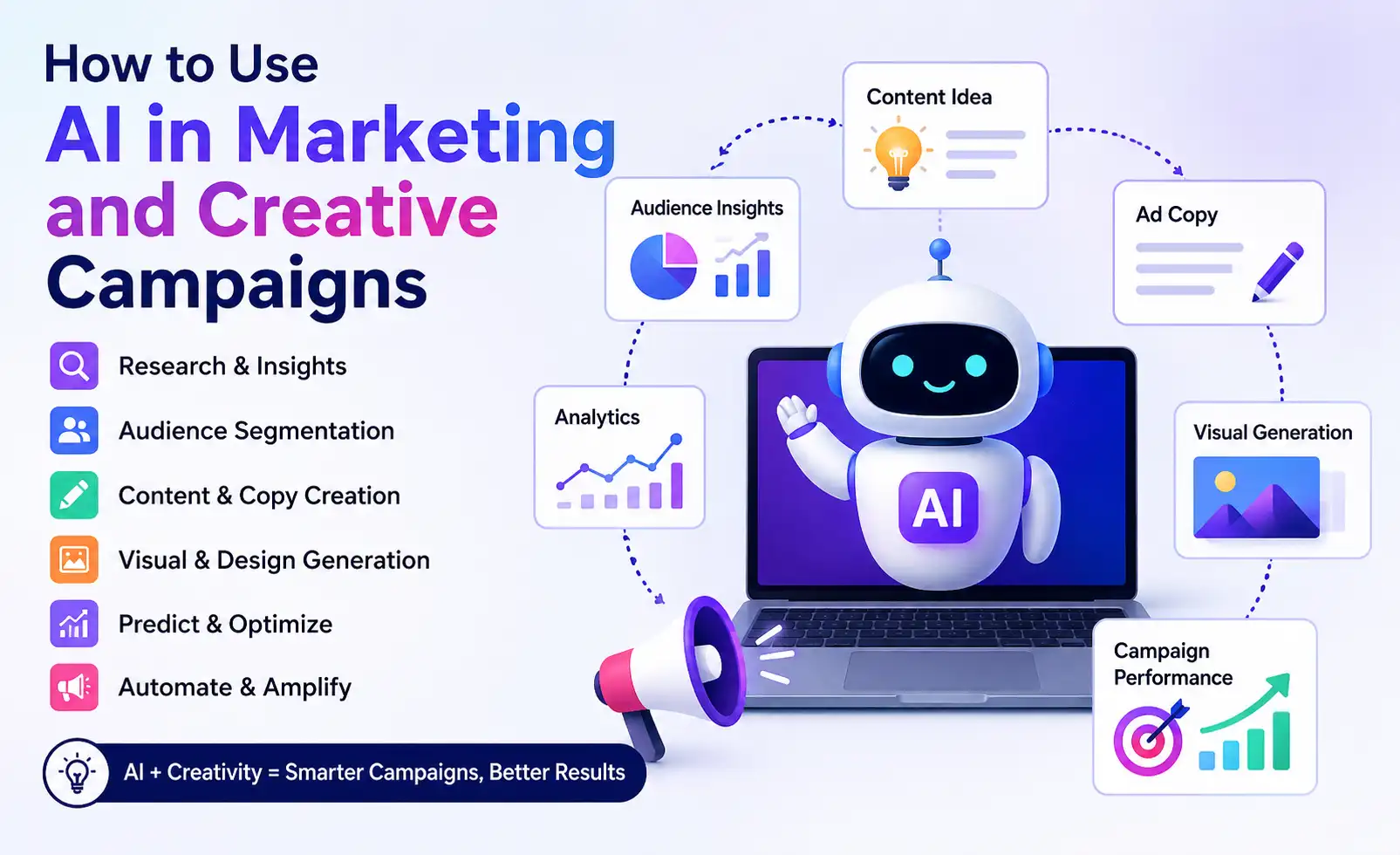
Artificial intelligence is not the future of marketing. It is the present. In 2026, the question is no longer whether AI will be used in marketing it is whether your organisation is using it strategically enough to remain competitive. The brands and agencies that have embraced AI intelligently are producing more content, delivering more personalised experiences, generating more actionable insights, and doing all of it at a fraction of the time and cost that would have been required just three years ago.
Yet for every brand using AI to genuinely transform its marketing effectiveness, there are many more using it superficially generating generic AI copy that sounds like no one in particular, producing AI imagery that lacks distinctive character, and making AI-driven decisions without the strategic framework to interpret them correctly.
This guide is about using AI in marketing and creative work intelligently, strategically, and in ways that enhance rather than diminish the human creativity and strategic thinking that make great brands great.
Understanding AI's Role: Amplifier, Not Replacement
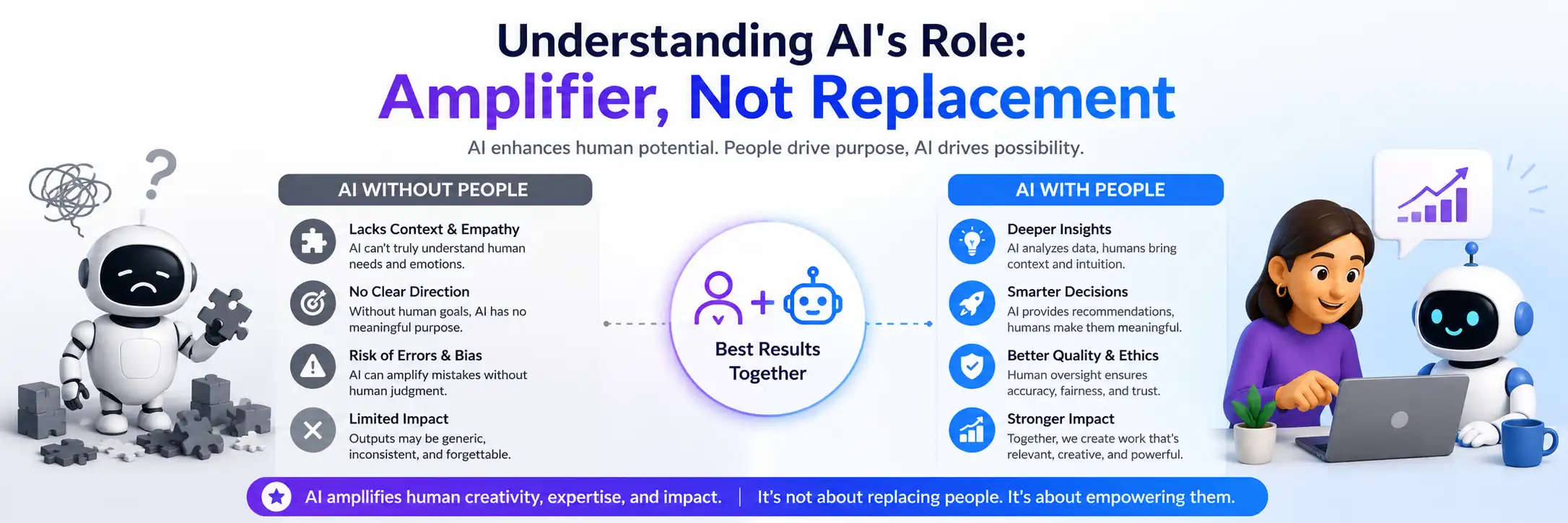
The most important conceptual framework for AI in marketing is the amplifier model. AI amplifies human capability, it does not replace it. It amplifies research, not strategic insight. It amplifies content production, not creative direction. It amplifies personalisation, not relationship building. It amplifies data analysis, not business judgement.
The brands that struggle with AI are those that use it to replace strategic thinking, treating AI output as a finished product rather than as raw material for human refinement. The brands that succeed with AI treat it as an extraordinarily capable tool that makes every human on their team dramatically more productive.
AI in Market Research and Audience Insights
Using AI for Competitive Analysis
AI tools can analyse competitive landscapes at a scale and speed that was previously impossible without large research teams. Applications include:
Analysing competitor social media presence: sentiment, engagement patterns, content performance, audience response
Monitoring competitor advertising creative and messaging through ad library analysis
Identifying gaps and opportunities in competitor content strategies
Tracking share of voice across digital channels
Tools like Brandwatch, Sprout Social, and Semrush's AI features can surface competitive intelligence continuously, flagging significant changes in real time rather than requiring manual periodic research.
AI-Powered Customer Insight
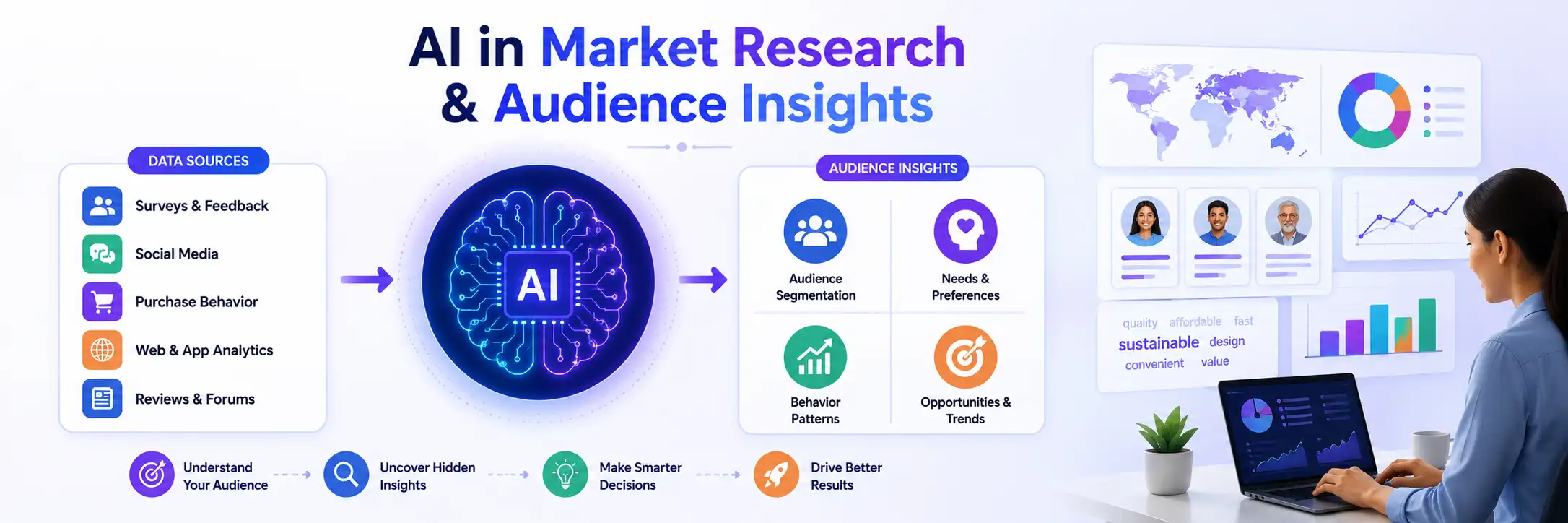
Understanding what customers really think, feel, and need at scale has historically been one of the most resource-intensive marketing activities. AI enables:
Sentiment analysis of customer reviews, social mentions, and support interactions surfacing patterns across thousands of data points that would take weeks to analyse manually
Natural language processing of customer feedback to identify the most frequently occurring themes, frustrations, and desires
Persona development supported by behavioural data analysis rather than purely manual research
Predictive customer lifetime value modelling that identifies high-potential customers earlier in the relationship
AI in Content Creation
AI Writing Tools for Marketing Copy
AI language models have transformed the economics of content production. Tasks that previously required hours of human writing time now require minutes but the quality of the output remains dependent on the quality of the human direction and refinement.
High-value applications of AI writing in marketing:
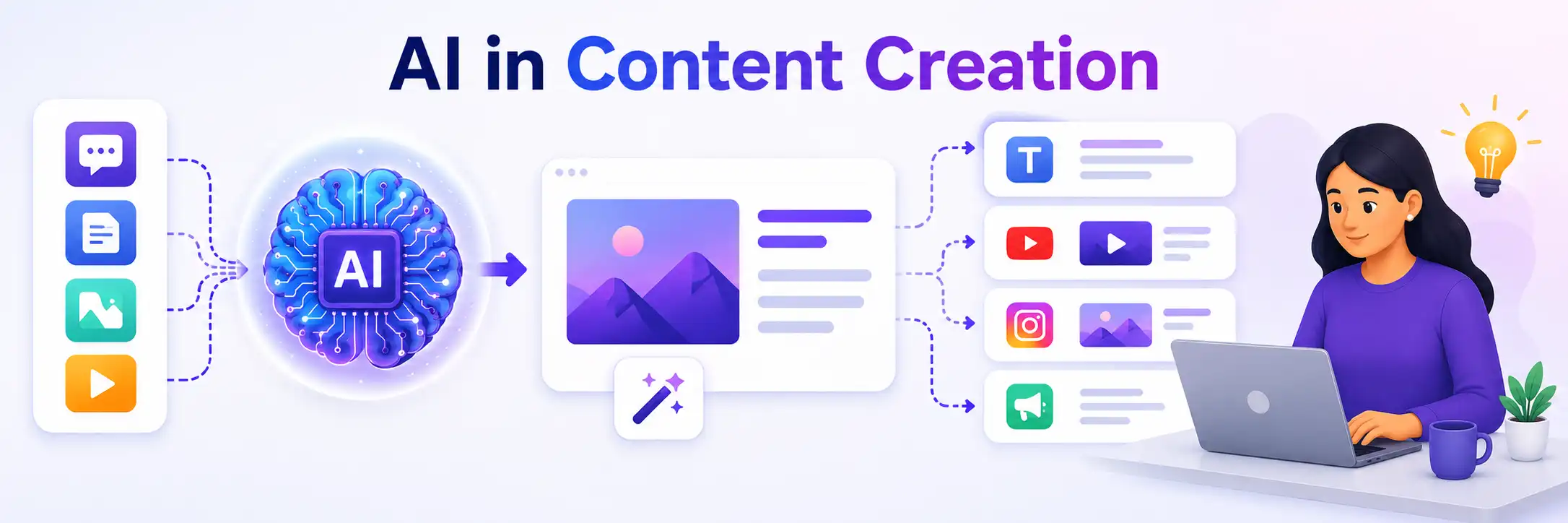
First-draft generation for blog posts, email campaigns, social media captions, and ad copy providing a workable starting point that a human writer refines into on-brand, high-quality output
Headline and CTA variation generation AI can produce 20 alternative headlines in the time it would take a human to write 3, providing a richer testing palette
Content repurposing adapting a long-form blog post into social media captions, an email newsletter, a LinkedIn article, and an infographic script
Translation and localisation support accelerating the adaptation of global campaign content for local markets
The human role in AI-assisted content production: strategic brief definition, brand voice guidance, factual accuracy review, quality refinement, and final editorial judgment. AI is a very capable first-draft engine; humans are the quality control and creative direction layer.
AI in Visual Content Creation
AI image generation has reached a quality level where it is genuinely useful in professional creative workflows though with important caveats about appropriate use cases and commercial licensing:
Concept exploration: generating 20 visual directions for a campaign brief in minutes, rather than commissioning multiple rounds of illustration or photography
Mood board creation: quickly assembling visual references for a creative direction without sourcing individually licensed images
Background and environment generation: creating specific atmospheric backgrounds for product photography composites
Social media variety: producing variations of a visual concept across different contexts or settings
Important considerations for AI imagery in commercial marketing: ensure your AI image generation tool is trained on properly licensed content (Adobe Firefly, Getty AI) for commercial use. Understand your brand's specific policy on AI imagery and disclose usage where your audience expects it.
AI in Personalisation and Customer Experience
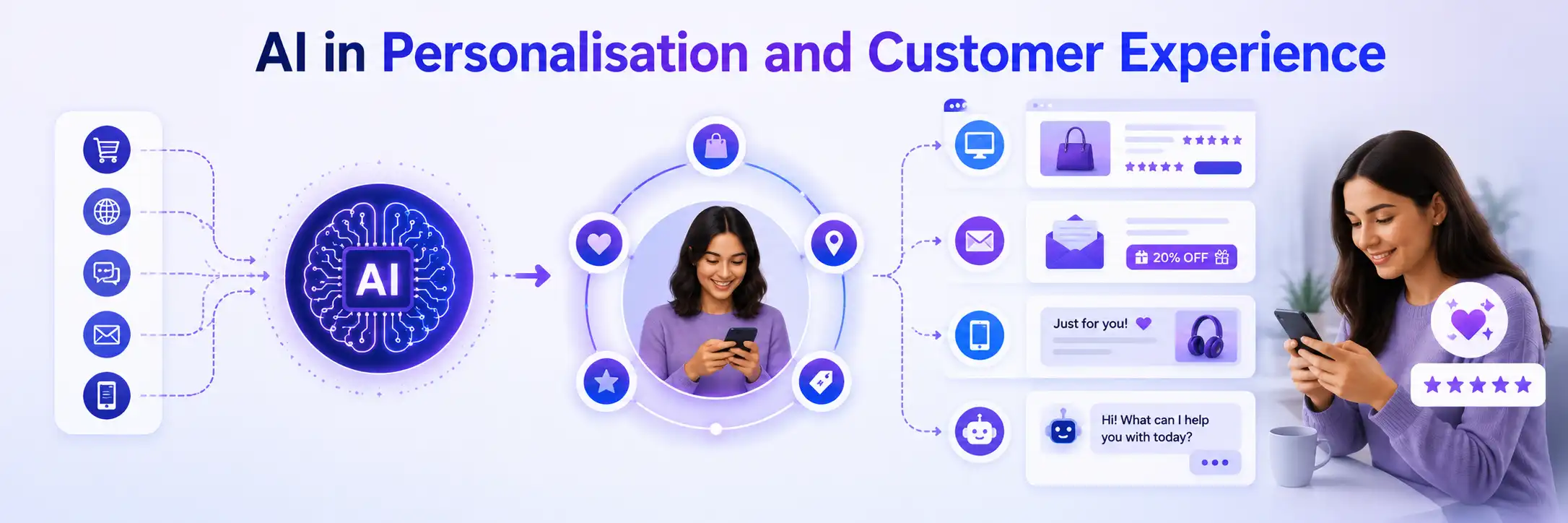
Dynamic Content Personalisation
AI-powered personalisation engines enable brands to deliver uniquely relevant experiences to each customer based on their history, behaviour, and demonstrated preferences:
Email campaigns with dynamically personalised content blocks different products, images, and messaging for each recipient based on their purchase history and browsing behaviour
Website personalisation different hero imagery, featured products, and messaging for returning customers vs. new visitors, for different geographic locations, or for different behavioural segments
Personalised product recommendations that go beyond 'you might also like' to genuinely predictive suggestions based on deep behavioural modelling
Personalised ad creative programmatic advertising that selects the most relevant creative variant for each individual viewer based on their profile
AI Chatbots and Conversational Marketing
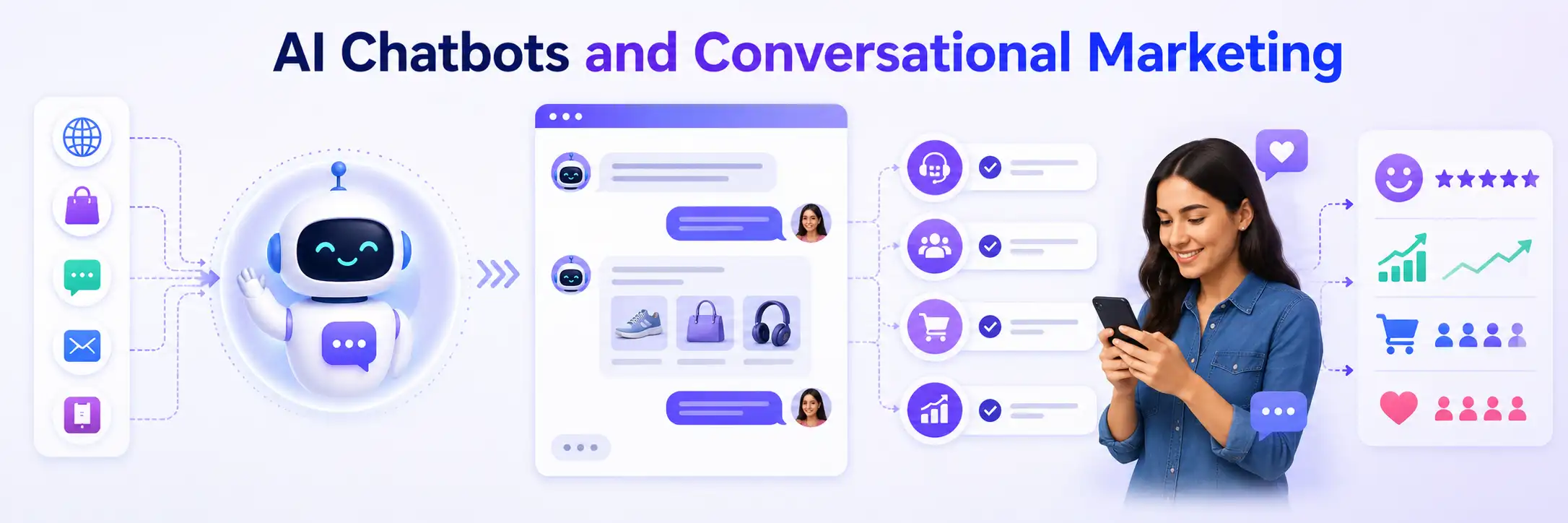
AI-powered chatbots have become a standard customer experience tool and the quality of conversational AI has improved dramatically. Well-implemented chatbot experiences can:
Answer the majority of common customer queries instantly and accurately, without human intervention
Qualify and route leads to the appropriate sales team member with full context captured
Provide personalised product recommendations within the conversation
Process simple transactions and order updates without human involvement
Be available 24/7 in multiple languages simultaneously
The key to effective AI chatbot implementation is defining the scope carefully what the bot does well, and at what point it hands off to a human and maintaining quality of brand voice and tone throughout the conversational experience.
AI in Campaign Analytics and Optimisation
Predictive Analytics for Campaign Planning
AI predictive analytics tools can model campaign performance before budget is committed, helping marketing teams make better investment decisions:
Predicting the optimal channel mix for a given campaign objective and audience
Modelling expected reach, frequency, and conversion at different budget levels
Forecasting seasonal demand patterns to inform content and promotional calendar planning
Identifying the highest-potential customer segments for campaign targeting
Automated Campaign Optimisation
In digital advertising, AI-powered campaign optimisation has become standard. Platforms including Google Ads, Meta Ads, and LinkedIn Campaign Manager now use machine learning to:
Automatically allocate budget across ad sets toward the best-performing audiences
Select the optimal creative variant for each individual ad impression
Adjust bidding strategies in real time based on predicted conversion probability
Identify new audience segments that behave similarly to existing high-value customers
The human role in AI-optimised campaigns: defining campaign objectives clearly, ensuring the algorithm is optimising for the right outcome, setting strategic guardrails (budget caps, audience exclusions, frequency limits), and providing diverse creative inputs for the algorithm to test and learn from.
AI in Influencer Marketing
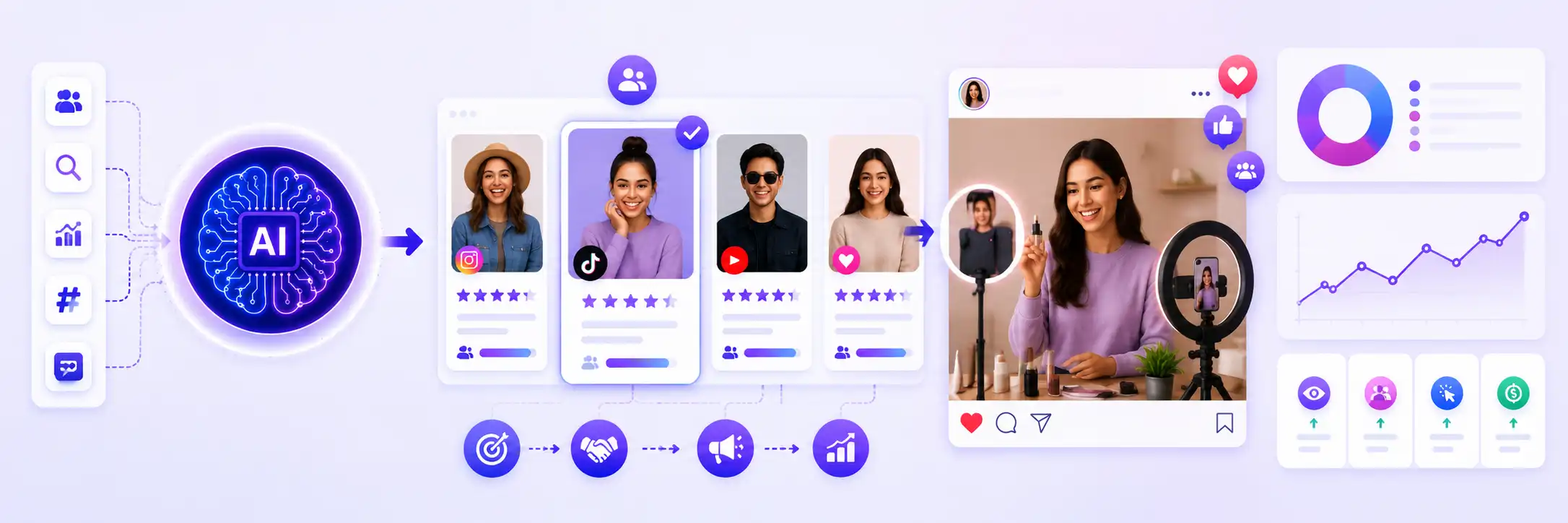
AI tools have significantly improved influencer marketing effectiveness by enabling more rigorous data-driven selection and performance evaluation:
Audience authenticity analysis: AI-powered tools can identify fake followers, engagement pods, and inauthentic activity with high accuracy
Brand alignment scoring: analysing an influencer's content history to predict alignment with brand values
Performance prediction: modelling expected reach, engagement, and conversion based on historical performance data
Content brief optimisation: using natural language processing to analyse what types of brand integrations in an influencer's content style have historically produced the best audience response
Ethical Considerations in AI Marketing

The power of AI in marketing comes with genuine ethical responsibilities that forward-thinking brands must address explicitly:
Transparency: being honest with audiences when AI has been used in content creation, particularly where it may affect how they interpret the content
Privacy: ensuring AI personalisation is built on appropriately collected, consented data not on surveillance or inference beyond what customers have agreed to
Bias: regularly auditing AI systems for discriminatory bias in audience targeting, content personalisation, or pricing
Authenticity: maintaining genuine human connection and brand voice in customer communications, not hiding behind AI to avoid authentic relationship-building
Accuracy: ensuring AI-generated content is factually reviewed before publication AI models can produce confident-sounding inaccuracies
Conclusion
AI in marketing and creative campaigns is already delivering transformational results for brands that use it strategically. The advantages faster production, cheaper experimentation, deeper personalisation, more actionable insights compound over time as the brands using AI most effectively build data and process advantages that widen the gap with competitors who are slower to adapt.
The strategic principle to keep front of mind is that AI amplifies human capability the quality of the output is always a function of the quality of the human strategic input. Invest in AI tools, but equally invest in the human skills and strategic clarity needed to direct them effectively. That combination is what creates genuinely competitive AI-powered marketing.



Comments