


Hiring a creative design agency is one of the most significant marketing investments a business can make. Done well, the relationship delivers a brand identity, a marketing system, and creative capabilities that the business could not develop as effectively in-house and which pay dividends for years in the form of stronger market positioning, greater customer recognition, and more effective marketing communications.
Done poorly through misaligned expectations, poor briefing, or choosing an agency that is not the right fit can be a frustrating, expensive experience that delivers less than hoped. The gap between these two outcomes is almost always a gap in expectations and understanding, not a gap in the capability of the people involved.
This guide is designed to give you a clear, honest picture of what a professional creative design agency delivers, how the process works, and what you need to bring to the relationship to get the most out of it.
What a Creative Design Agency Actually Does
The term 'creative design agency' covers significant variation in scope, specialisation, and capability. Before considering any agency, understand what type of creative partner you are looking for:
Most businesses benefit from a combination of capabilities: a full-service agency relationship, or a lead agency for brand identity work plus specialist relationships for specific execution needs.
The Discovery Process: Understanding Your Business
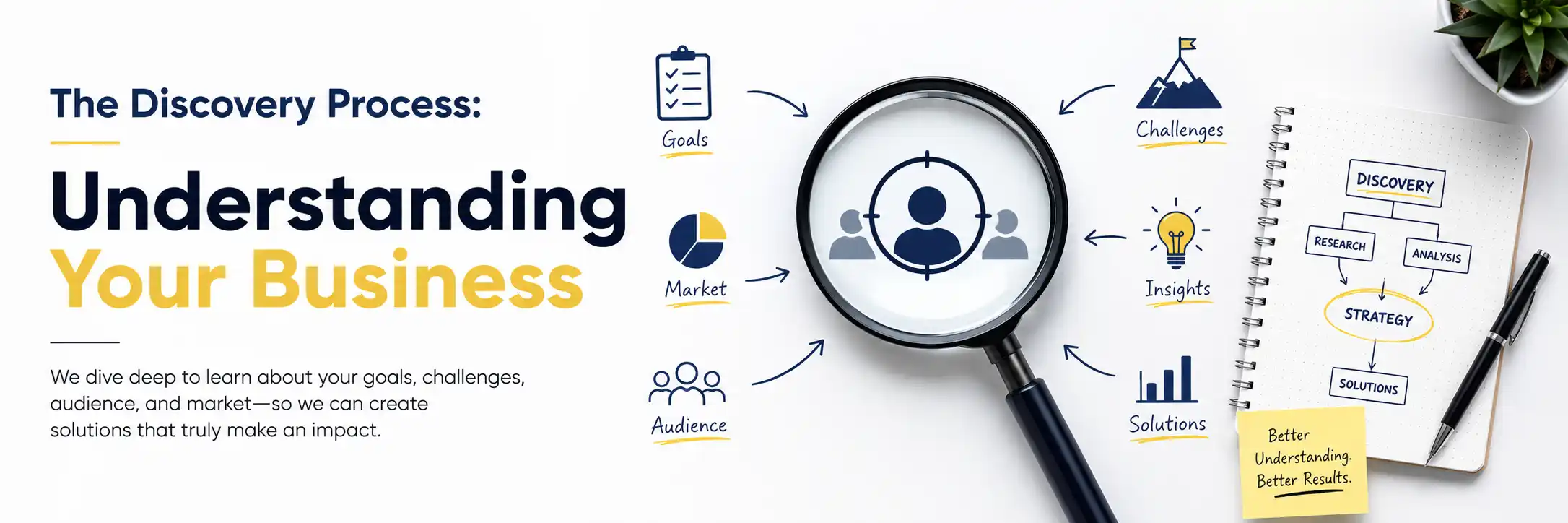
Any professional creative agency will begin a significant engagement with a structured discovery process not just because they need information, but because the quality of their creative work is directly dependent on the depth of their understanding of your business, your audience, and your objectives.
Expect to be asked:
About Your Business
What is your business model, and how does it create value for customers?
What are your core products or services, and what makes them distinctive?
Who are your main competitors, and how do you genuinely differ from them?
What is your current brand perception and how do customers describe you today?
What business objectives are you hoping this project will help achieve?
About Your Audience
Who exactly is your ideal customer in demographic, psychographic, and behavioural detail?
What do they care about, what frustrates them, and what do they aspire to?
Where do they encounter your brand, and at what stages of their journey?
What do they currently think of your brand versus your competitors?
About the Project
What specifically are you trying to achieve with this project?
What will success look like and how will it be measured?
What is the scope: what will be delivered, for what channels, by when?
What is the budget envelope you are working within?
Who are the stakeholders who need to be involved in approvals and decisions?
If an agency is not asking these questions, be concerned. Agencies that move straight to execution without strategic discovery are likely to produce work that looks attractive but doesn't serve your specific business objectives.
The Strategy Phase: Before Design Begins
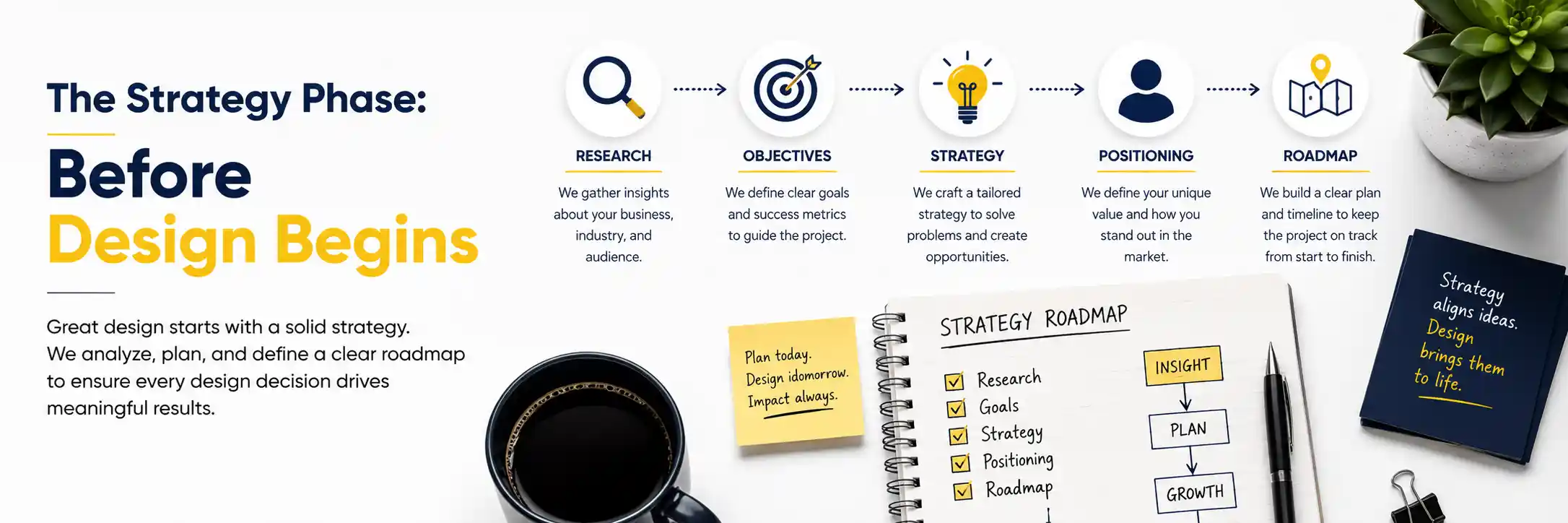
In a professional brand identity or campaign engagement, the strategy phase precedes any design work. This is the phase where the strategic foundation is defined and it is where the most important decisions of the project are made.
Deliverables from a thorough strategy phase may include:
Brand audit: assessment of your current brand's strengths, weaknesses, and opportunities for development
Competitive landscape mapping: visual and strategic analysis of how competitors are positioned in the market
Audience persona development: detailed profiles of your primary target customer segments
Brand positioning statement: a precise articulation of your brand's distinctive position in the market
Brand architecture (if relevant): a framework for how multiple products, services, or brands relate to each other
Creative brief: the strategic document that defines the objectives, audience, positioning, and creative direction for the design work that follows
Some clients find the strategy phase frustrating; they came for a logo, not a workshop. The instinct to skip straight to design is understandable but almost always counter-productive. The strategy phase is what ensures the design serves your objectives rather than just looking good in isolation.
The Creative Process: What to Expect at Each Stage
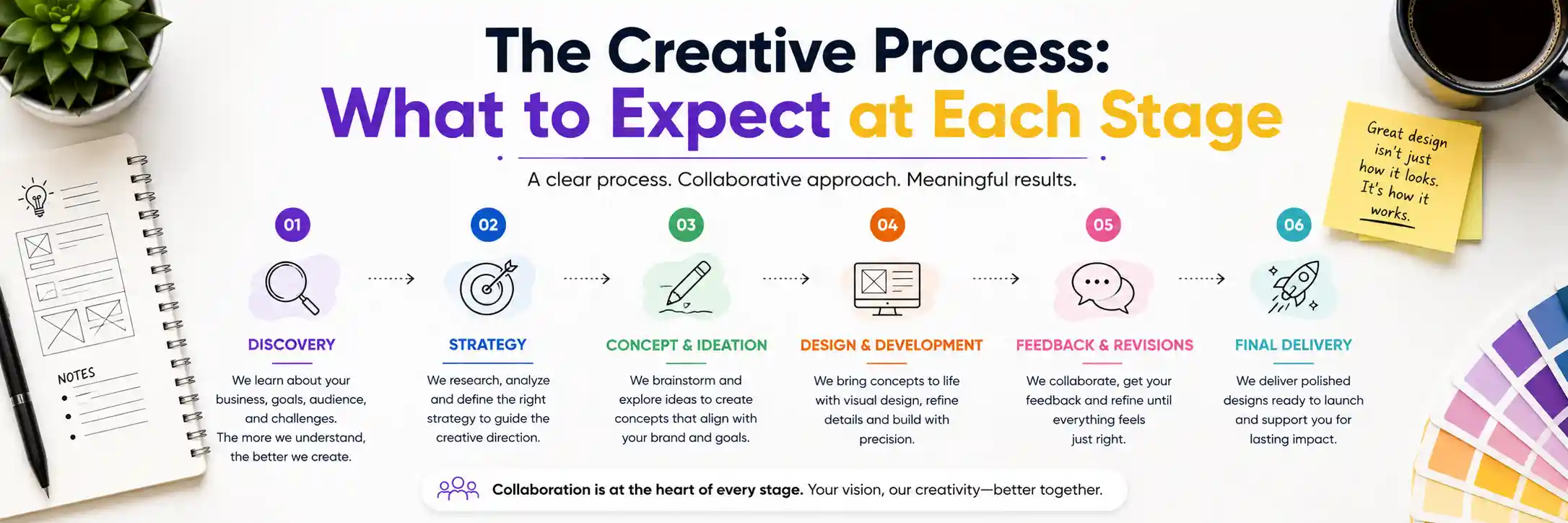
Creative Brief Presentation and Alignment
Before any creative work is shown, the agency should present and gain explicit agreement on the creative brief the strategic document that defines what the design is trying to achieve, the audience it is for, the emotions it should evoke, and the parameters within which it will operate. This alignment checkpoint prevents the costly misalignment of receiving creative work that is beautifully executed but strategically wrong.
Creative Concept Presentation
The first creative presentation typically presents 2-3 distinct concept directions, not a single solution. Each concept is a coherent creative expression of the brief, exploring different interpretations of the brand personality, different visual territories, and different emotional registers.
What good agencies present at this stage:
Each concept presented with a clear rationale explaining why it serves the strategic objectives not just what it looks like
Each concept shown in realistic context applied to actual touchpoints (business card, website header, social media post) rather than presented as isolated logo artwork
Each concept presented with the confidence that it is a considered recommendation, not a menu of options for the client to mix-and-match
Feedback and Iteration
Creative feedback is a skill and clients who develop it get significantly better creative work. Effective feedback:
References the strategic brief: 'This doesn't feel confident enough for our target audience of senior professionals' is more useful than 'I prefer something bolder'
Addresses the concept, not the execution: 'Is there a way to achieve this direction with a warmer color palette?' is more useful than 'I don't like the blue'
Is consolidated: feedback should come from a single designated decision-maker or a consolidated team discussion, not from multiple stakeholders providing independent, potentially contradictory input
Is provided in writing: documented feedback prevents miscommunication and provides a clear record of what was requested at each stage
Most professional engagements include a defined number of revision rounds at each stage. Understanding these limits upfront helps both parties manage the process efficiently.
Refinement and Finalisation
Once a concept direction has been selected and refined through feedback rounds, the agency moves into a refinement phase polishing the selected direction across the full scope of deliverables, testing it across all specified applications, and preparing final files.
Final deliverables for a brand identity project typically include:
Complete logo file package (all variants, all approved color combinations, all file formats)
Brand guidelines document
Template files for specified applications
Asset library (icons, patterns, photography selections, etc.)
Typography licensing information
What Good Agencies Will and Won't Do
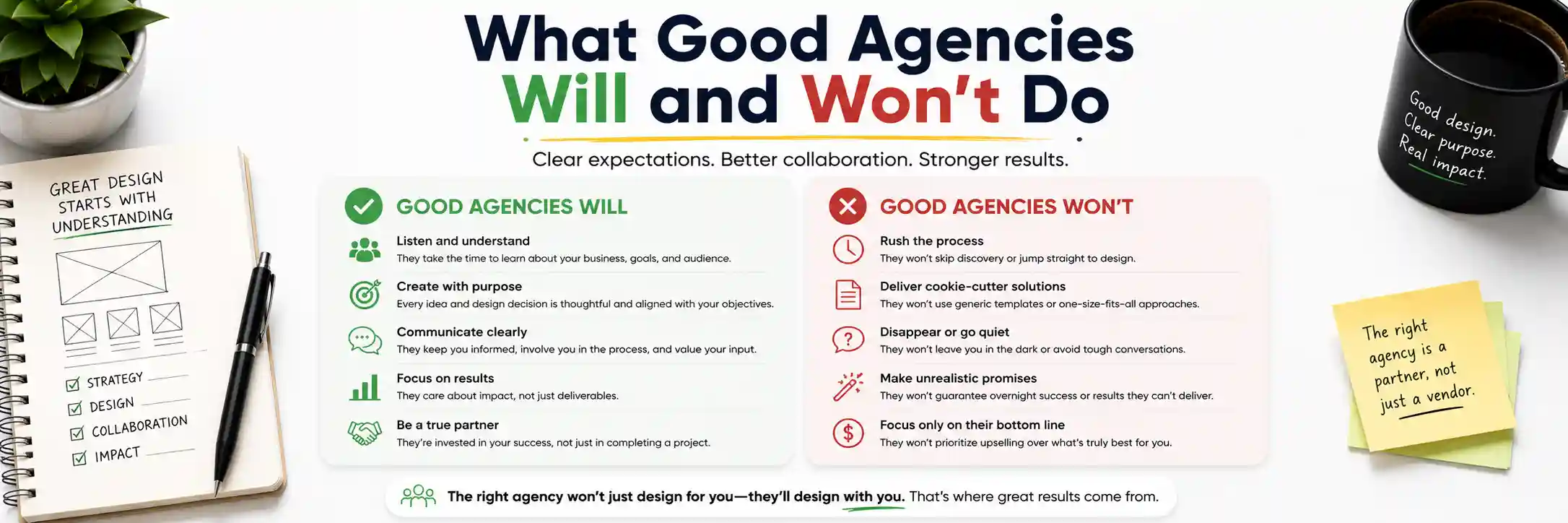
What Good Agencies Do
Challenge your brief if they believe it is strategically flawed a good agency is a strategic partner, not an order taker
Present work with rationale and defend their creative decisions with strategic reasoning
Be honest about what your budget realistically allows and suggest phasing or scope adjustments rather than delivering below-standard work
Proactively manage your expectations about timelines, process complexity, and likely outcomes
Invest time in genuinely understanding your business before proposing creative solutions
Provide case studies and references that demonstrate relevant experience
What Good Agencies Won't Do
Design by committee: good agencies produce better work when they have clear decision-making accountability they don't thrive in environments where ten people have equal veto on creative decisions
Discount their process: creative exploration, strategic development, and quality revision take real time. Agencies that agree to artificially compressed timelines or heavily discounted processes typically deliver proportionally reduced quality
Promise specific search ranking results from design work any agency that guarantees specific SEO outcomes from a brand identity project is making a claim they cannot support
Plagiarise: a professional agency's creative output should be original. Request assurance that logo designs are trademark-checked and that no elements are copied from other existing brands
How to Be a Better Client
The quality of creative work that a design agency produces is significantly influenced by the quality of the client relationship. The most talented creative team in the world will produce mediocre work when given a poor brief, contradictory feedback, and indecisive approval processes. Here is how to get the most from your agency:
Write a clear, detailed brief: time invested in the brief is multiplied in the quality of creative output. A thorough brief eliminates ambiguity that wastes everyone's time
Designate a single point of contact: creative projects require one person with the authority to make and communicate decisions on behalf of the organisation
Commit to agreed timelines: agencies plan their capacity around client approval timelines delays in client feedback create cascading delays and cost impacts
Trust the process: if you have chosen an agency whose work you respect and whose process you understand, give them the space to do their best work. Excessive micromanagement constrains creative quality
Provide feedback in reference to the objectives: always relate feedback to the agreed creative brief and strategic objectives
Pay fairly and on time: this is a professional service relationship the same standards of commercial conduct that you expect from your own clients apply in the other direction
Understanding Costs and Value
Creative design agency fees vary enormously depending on agency size, reputation, location, project scope, and market positioning. A startup's brand identity project with a boutique agency in India might cost ₹1.5-5 lakh; the same project scope with a mid-size established agency might cost ₹5-20 lakh; with a major brand consultancy, it could cost many times more.
How to evaluate cost in context:
Consider the long-term value: a strong brand identity serves your business for 5-10+ years across every marketing activity. Amortised over this period, even a significant investment represents very low annual cost
Understand what is included: compare like-for-like. An apparently cheaper agency quote may exclude strategy, brand guidelines, or file delivery that a higher quote includes
Evaluate the portfolio: the quality of an agency's past work is the best predictor of the quality of the work they will produce for you
Consider relationship fit: you will be working closely with these people through a process that involves subjective creative decisions and requires clear communication. Cultural and interpersonal fit matters
Red Flags to Watch for When Choosing an Agency
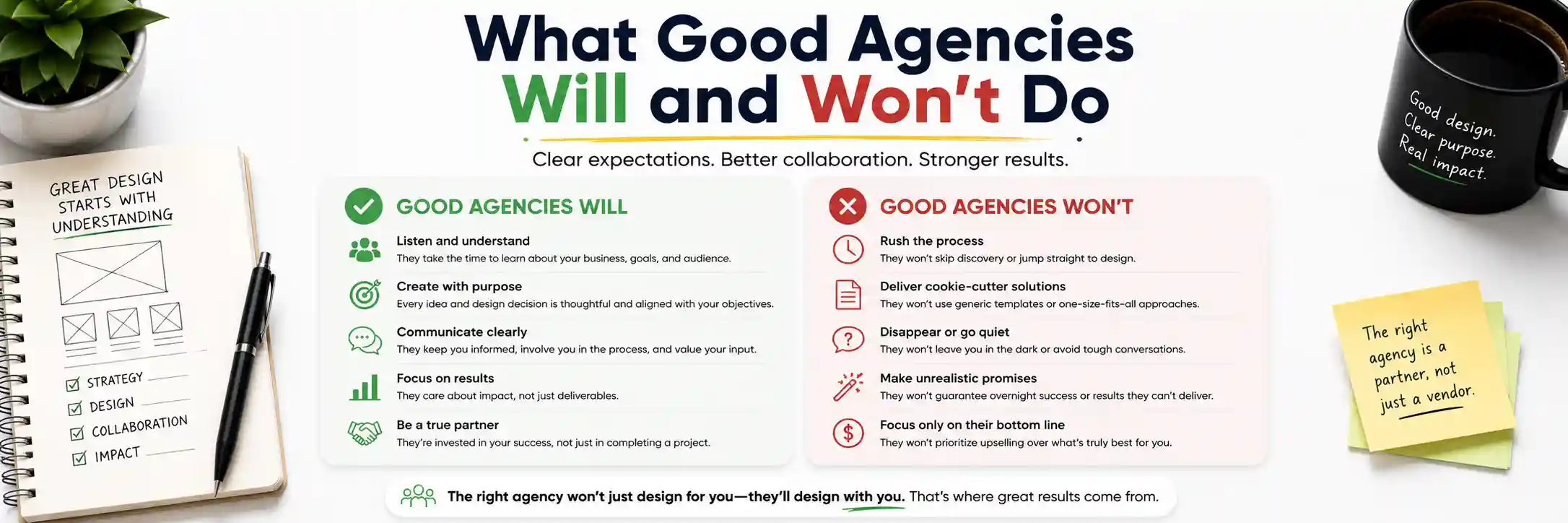
No discovery process: agencies that jump straight to design without strategic discovery produce work that looks good but doesn't serve your specific objectives
Portfolio that all looks the same: great agencies develop distinctive creative solutions for each client. A portfolio where every project looks like the same designer's personal style indicates limited creative range
Unrealistically fast timelines: quality creative work cannot be rushed without cost. Agencies that promise delivery in improbably short timeframes are either cutting corners on process or setting you up for disappointment
Reluctance to provide references: established agencies have satisfied clients who are willing to speak to their experience. Reluctance to provide references is a warning sign
No contract or unclear intellectual property terms: ownership of creative work must be explicitly defined. Ensure the contract specifies what IP is transferred to you upon final payment, and what rights the agency retains
Aggressive discounting without scope reduction: quality creative work has real costs. Agencies that heavily discount without reducing scope are either financially unsustainable or planning to cut corners
Conclusion
A great creative agency relationship is one of the most productive investments a business can make in its brand and marketing effectiveness. The best agencies bring strategic insight, creative excellence, production quality, and market understanding that would take years and significant investment to develop in-house and they deliver it within defined timeframes and to exacting standards.
Approaching the relationship with clear objectives, a thorough brief, realistic expectations, and a commitment to the collaborative process is how businesses get the best from their creative partners. The most successful agency-client relationships are genuine partnerships built on mutual respect, clear communication, and shared commitment to achieving meaningful results.
Frequently Asked Questions
Q: How long does a brand identity project typically take?
A professional brand identity project covering strategy, concept development, refinement, and final delivery typically takes 6-12 weeks for a comprehensive engagement. Rush timelines are available but come with trade-offs in thoroughness of the strategic foundation.
Q: Do I need to have a big budget to work with a good agency?
Budget requirements vary enormously by agency type and size. Boutique and specialist agencies often deliver exceptional quality at significantly lower price points than large network agencies. The key is aligning the scope of the project with the budget available and being honest with agencies about your budget so they can propose appropriate solutions.
Q: Who owns the design work, me or the agency?
This depends entirely on what your contract specifies. Ensure your contract explicitly states that all IP (intellectual property) in the final delivered work transfers to you upon final payment. Be aware that stock images, font licenses, and third-party elements may have separate licensing restrictions.
Q: What if I don't like the first creative concepts?
Professional agencies expect creative feedback and iteration; it is a standard and expected part of the process. Most contracts specify a defined number of revision rounds. Provide specific, objective-referenced feedback, and the process will move forward efficiently. If you fundamentally disagree with every concept direction, request a conversation about the strategic foundation before requesting entirely new directions.

Comments