


Introduction
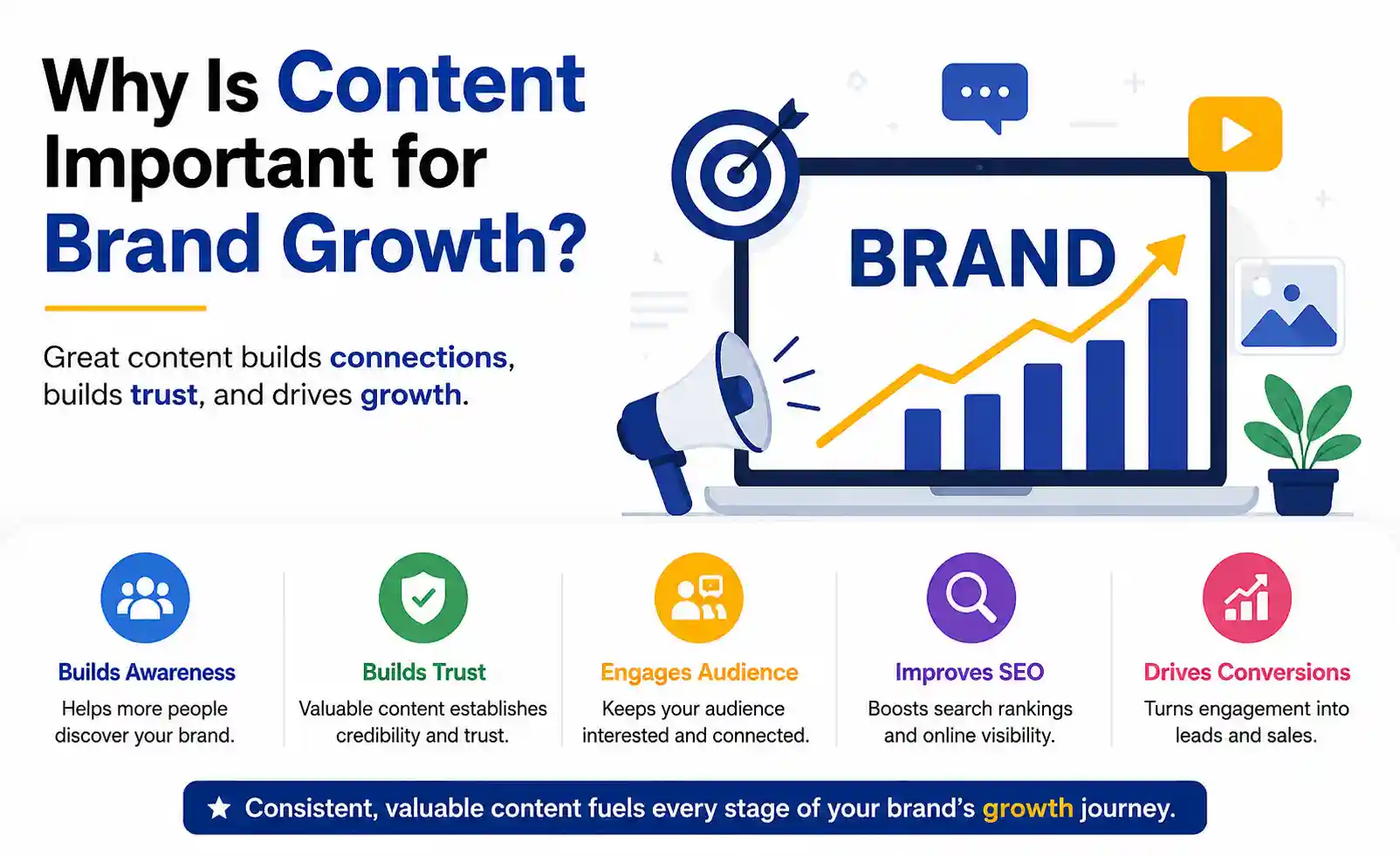
In a world oversaturated with advertising messages, interruptive marketing is losing its power. Ad blockers are mainstream. Streaming services with ad-free tiers have millions of subscribers. Email open rates for promotional content are declining. The old model interrupts people with your message and hopes repetition creates preference and is becoming progressively less effective and more expensive.
The brands growing fastest in 2026 have largely abandoned the interruption model in favour of a far more powerful alternative: content marketing. Instead of interrupting people to demand their attention, they create content so valuable, so useful, so entertaining, or so inspiring that people seek it out, share it, and return to it again and again.
This is not a new idea: magazines, branded radio programmes, and company newsletters predate digital media but digital channels have made content marketing available to businesses of every size, at a fraction of historical costs, with measurable results that were impossible in the pre-digital era.
What Is Content Marketing?

Content marketing is the strategic creation and distribution of valuable content articles, videos, podcasts, infographics, guides, tools, and more that serves the informational, educational, entertainment, or inspirational needs of a defined audience, with the ultimate aim of driving profitable brand relationships and customer action.
The key differentiator from traditional advertising is value. Content marketing creates something that the audience genuinely wants to engage with, rather than something they tolerate or ignore. This voluntary engagement creates a fundamentally different brand relationship one built on reciprocity and trust rather than repetition and interruption.
Reason 1: Content Builds Brand Authority and Expertise

In virtually every industry and category, brand authority the perception that a brand is knowledgeable, credible, and trustworthy in its domain is a critical driver of purchase decisions. Consumers choose brands they perceive as experts over comparable alternatives.
Content is the most powerful tool available for building brand authority at scale. When a brand consistently produces content that demonstrates deep knowledge, genuine insight, and practical usefulness in its domain, audiences begin to associate that brand with expertise. Over time, this expertise association extends to their products and services and to the purchasing decisions that follow.
Real-world examples:
HubSpot has become synonymous with inbound marketing expertise through its blog, academy, and research content a brand authority that directly drives its software sales
Healthline has built one of the most trusted health information brands through rigorous, medically reviewed content authority that converts to product and service revenue
Buffer has built significant brand equity in the social media management space through transparent, data-driven content about social media strategy and marketing content that serves both awareness and customer education functions
For smaller brands, content authority is often the most accessible competitive differentiator available. A genuinely expert voice in a specific niche can outperform a larger competitor's generic content, and the SEO benefits that follow can deliver audience reach that would be economically impossible through paid advertising.
Reason 2: Content Drives SEO and Organic Discovery
Search engines remain one of the primary ways people discover new brands and content is the primary currency of search engine ranking. Brands that consistently produce high-quality, relevant, search-intent-aligned content build organic search visibility that generates compounding audience growth over time.
The SEO-content relationship works through several mechanisms:
Keyword coverage: each piece of content targets specific search queries relevant to your audience's informational needs, expanding your visibility across a wider range of searches
Topical authority: Google's algorithms increasingly reward sites that demonstrate deep, comprehensive coverage of a topic area a signal that correlates strongly with consistent content investment
Backlink generation: high-quality content earns links from other websites naturally, one of the most powerful signals of authority in Google's ranking algorithm
User engagement signals: content that earns high time-on-page, low bounce rates, and return visits signals to search engines that your site provides genuine value
The fundamental economics of SEO content are compelling: a piece of content that earns a first-page ranking for a relevant search query continues to generate free organic traffic for months or years after the initial publication investment. This compounding return is fundamentally different from the pay-to-play economics of advertising, where traffic stops the moment budget does.
Reason 3: Content Builds Audience Relationships and Trust

Trust is the foundational resource of every brand relationship. Without trust, no marketing message is effective prospects don't believe product claims, existing customers don't advocate, and brand loyalty is shallow and easily disrupted by competitors.
Content builds trust through consistent demonstration of genuine value. When a brand provides useful information, honest perspectives, or genuinely entertaining experiences without asking for anything in return, it makes deposits in the trust bank of its audience. These deposits accumulate over time and are drawn upon when purchase decisions arise.
Psychologically, this trust-building process works through several mechanisms:
Reciprocity: humans feel a natural obligation to return value they have received. A brand that has provided genuinely useful free content creates a reciprocity dynamic that influences purchasing behaviour
Familiarity: repeated positive encounters with brand content build familiarity, and familiarity creates preference. The 'mere exposure effect' the psychological tendency to prefer things we encounter repeatedly works powerfully in content marketing
Social proof: content that generates comments, shares, and engagement creates visible evidence of audience value, reinforcing perceived quality for new audience members
Transparency: behind-the-scenes content, founder stories, and honest perspectives on industry topics create a transparency that builds authenticity increasingly valuable in an era of corporate scepticism
Reason 4: Content Supports Every Stage of the Customer Journey

One of content marketing's most valuable strategic characteristics is its ability to serve customers at every stage of their journey from first awareness of a problem or brand to post-purchase loyalty and advocacy.
Brands with comprehensive content strategies address all of these stages, rather than focusing exclusively on top-of-funnel awareness content (the most common content marketing imbalance).
Reason 5: Content Generates Leads and Revenue

Content is not merely a brand-building exercise it is a direct lead generation and revenue generation tool. Brands that have invested in content marketing consistently report it as one of their most effective lead generation channels:
Lead magnet content: high-value downloadable resources (guides, templates, calculators, research reports) exchanged for email addresses generate qualified leads at a fraction of paid advertising cost
Gated content: more detailed content webinars, courses, in-depth research that requires registration creates lead generation at scale
Product-led content: content designed specifically to educate audiences about problems that the brand's product solves creates direct purchase intent
Case studies and social proof: detailed customer success stories create conversion-ready content that sales teams use throughout the purchase process
The conversion chain from content to revenue: organic search finds the content → reader finds genuine value → trust and familiarity are established → reader returns or follows the brand → email subscription or community join occurs → targeted content nurtures toward purchase consideration → purchase decision is made with brand preference already established.
Reason 6: Content Fuels All Other Marketing Channels
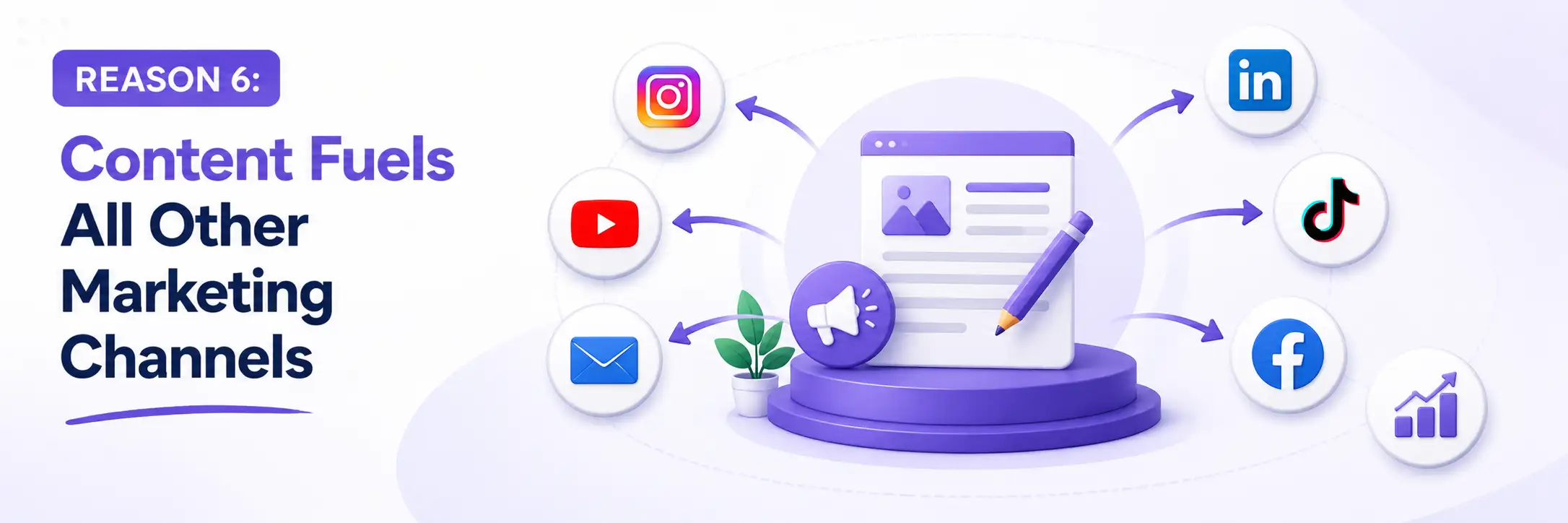
A well-executed content programme creates assets that fuel every other marketing channel, creating compounding value across the full marketing ecosystem:
Social media: blog posts become social captions, infographics, quote cards, short-form videos, and carousel content
Email marketing: content provides value for every email campaign, reducing dependence on promotional-only sending
Sales enablement: case studies, guides, and comparison content give sales teams credible, useful materials to share at every stage of the sales process
PR and media: original research, data, and expert commentary from a brand's content programme create media coverage opportunities
Paid advertising: high-performing organic content identifies the topics and messages that resonate with the audience, informing paid creative strategy
Partnerships: valuable content creates co-marketing and guest contribution opportunities with complementary brands and publishers
Building a Content Strategy That Drives Brand Growth
Random acts of content publishing inconsistently, without audience insight, without SEO strategy, without distribution planning do not deliver brand growth. Effective content marketing requires strategic structure:
Define content objectives: what specific brand growth outcomes is content meant to drive? (brand awareness, organic traffic, lead generation, customer retention, authority building)
Define audience and search intent: who exactly is the content for, and what specific questions, problems, and desires does it address?
Build a content calendar: plan content production in advance, aligning with seasonal moments, product launches, and audience interest patterns
Invest in quality over quantity: one genuinely excellent piece of content outperforms twenty mediocre ones in every meaningful metric
Optimise for search: apply keyword research and on-page SEO best practices to every piece of content
Build a distribution system: define how each piece of content will be amplified across owned channels (email, social), earned channels (PR, shares), and paid channels (content promotion)
Measure and iterate: track performance metrics (organic traffic, time on page, conversions, shares, backlinks) and use the data to continuously improve your content strategy
Conclusion
Content is not a marketing tactic it is a long-term brand growth strategy. Its benefits compound over time: each piece of valuable content adds to the brand's authority, each organic search ranking widens the audience, each trust-building interaction deepens customer relationships. The brands that invest in content systematically and consistently build an audience asset that grows more valuable over time and becomes increasingly difficult for competitors to replicate.
In a marketing environment where attention is the scarcest resource and consumer trust is the most valuable currency, content marketing is one of the most reliable and sustainable paths to brand growth available. The question is not whether to invest in content it is whether to start now or later. The brands that started earlier are already reaping the compounding benefits.



Comments