


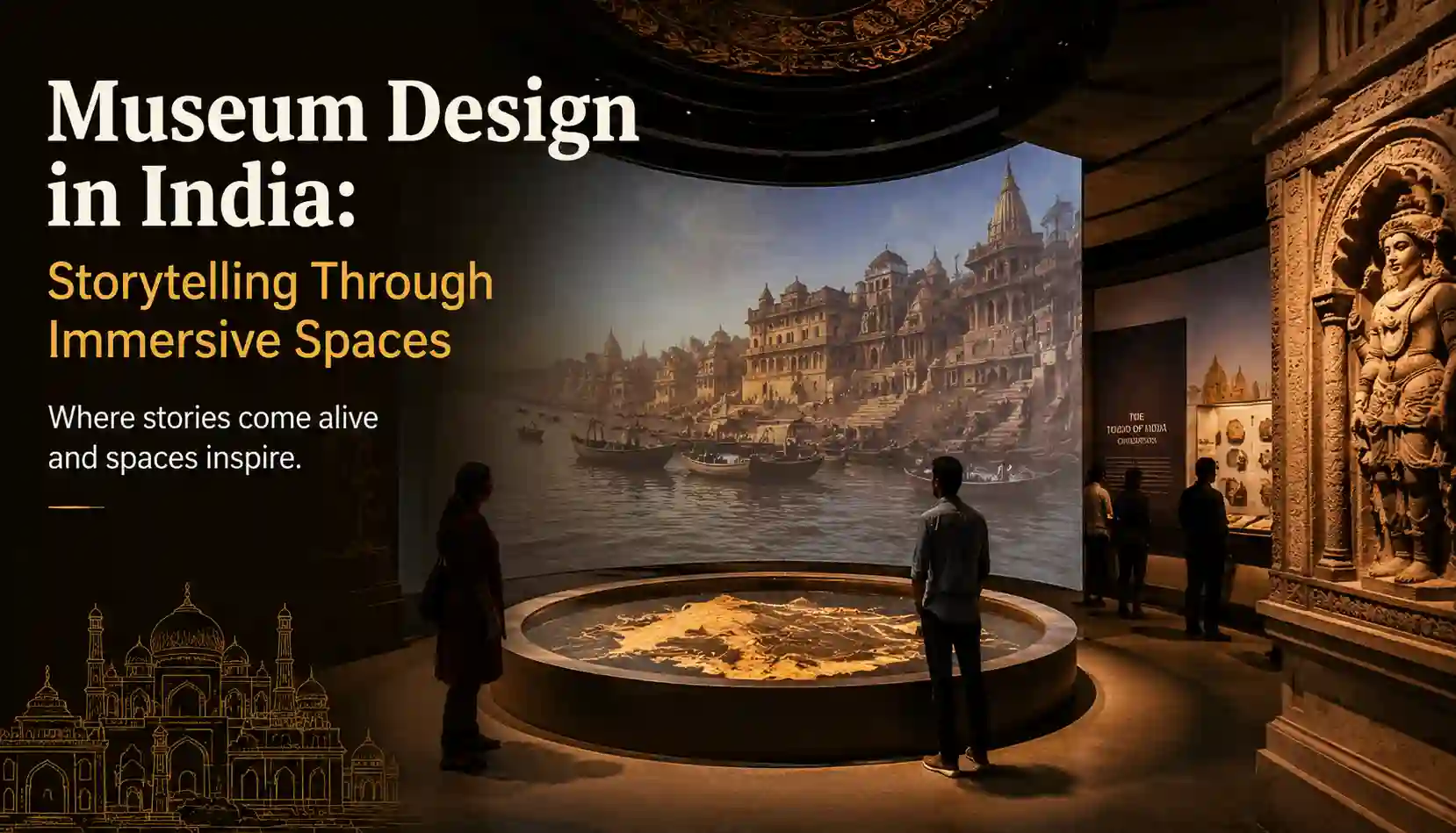
India has thousands of museums. Most of them are under visited, underfunded, and honestly underdesigned.
The information is often there. The artifacts, the historical records, the scientific specimens. What's missing in many cases is a considered visitor experience a design intelligence that shapes how someone moves through a space, what they encounter in what order, how information is presented, and what emotional journey they take.
A museum is not a warehouse for objects. It's a storytelling environment. And storytelling environments have to be designed.
At Swaparichay Studios, we work with heritage institutions, government bodies, corporate history museums, and visitor centres. The projects vary enormously in content and scale. The design challenge is always the same: how do we take a body of information and create an experience someone wants to have?
The Architecture of a Museum Experience
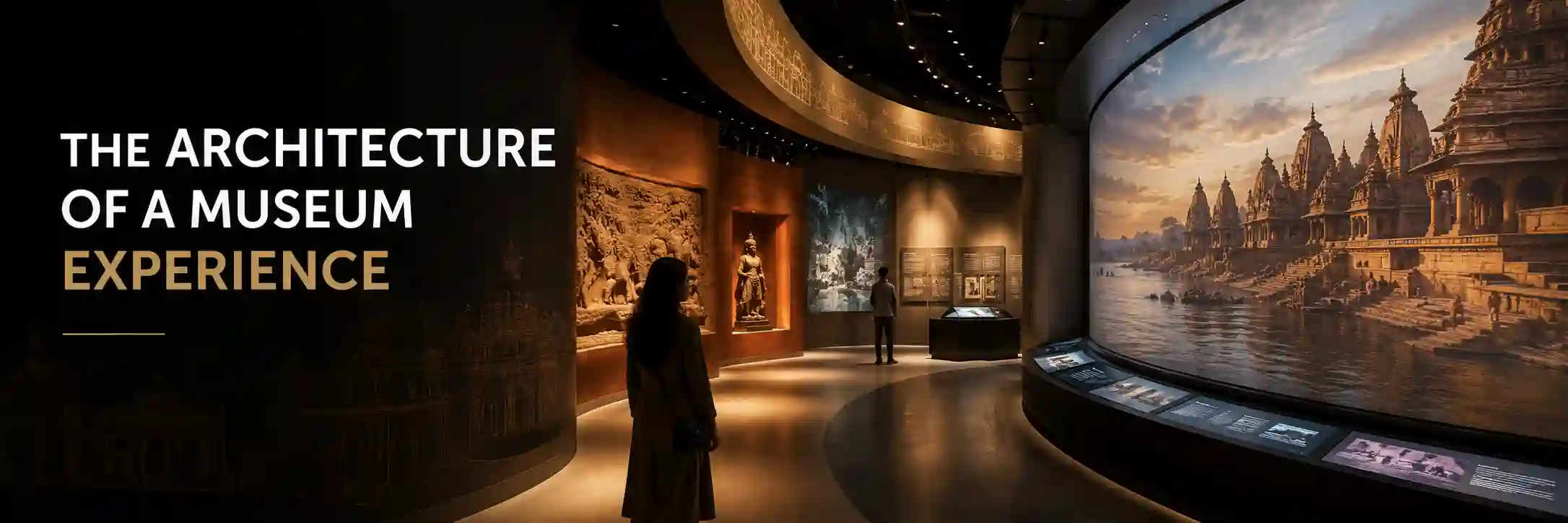
Before any panel is designed, before any object is placed, there's a narrative architecture question: what is the story, and how does the visitor encounter it?
This isn't the same as an information architecture question (what categories of content do we have?). It's about emotional logic. What should someone feel when they first walk in? What should they know, question, and discover as they move through the space? What's the peak moment? What do they carry out with them?
In our experience, the museum projects that work best are the ones where the content team and the design team are aligned on the story before any design work begins. When the design follows the narrative rather than the other way around, the result is coherent.
Exhibition Storytelling Design: Key Principles
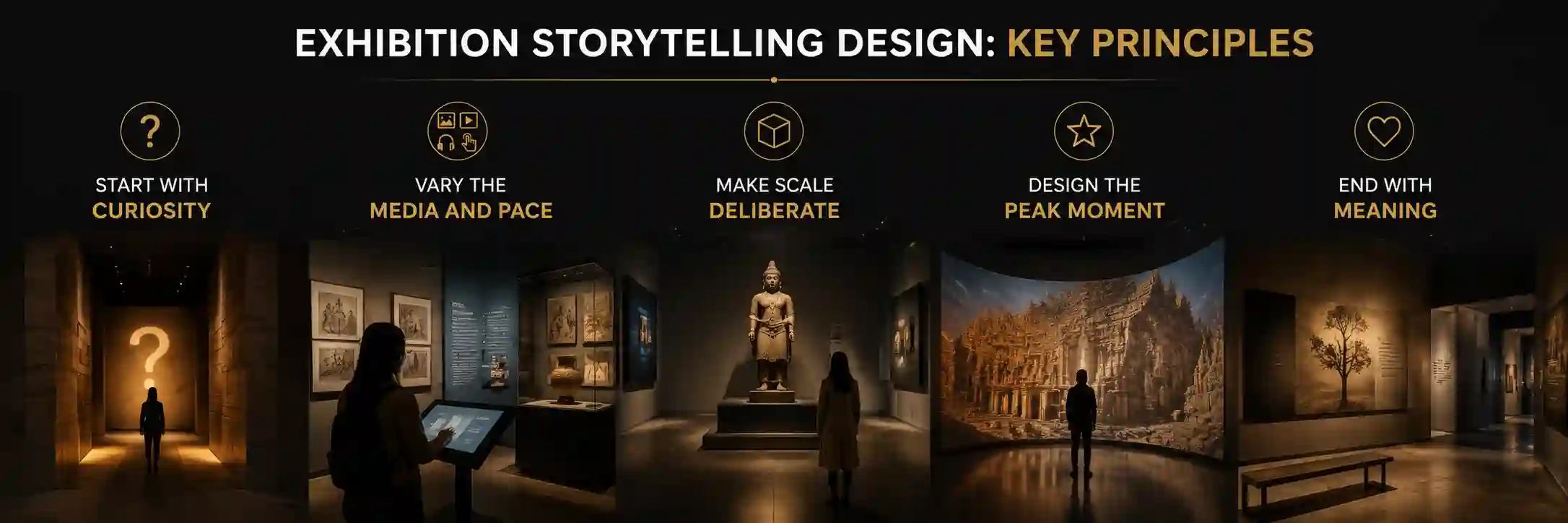
Start with curiosity, not information
The entrance experience should create a question, not answer one. People engage more deeply when they enter a space wanting to know something. The best museum entrances we've designed create a moment of intrigue before delivering any content.
Vary the media and pace
Dense text panels next to more dense text panels create fatigue. Good exhibition design alternates between reading, looking, listening, touching, and sometimes moving. Varying the mode of engagement sustains attention over longer visits.
Make scale deliberate
Object size and display size are branding decisions. A single significant artifact displayed with generous space says something different about its importance than the same artifact displayed in a crowded case. Curation is partly a sizing and spacing exercise.
Design the peak moment
Every good museum experience has a moment that stands out an immersive room, a large-scale image, a particularly striking object display, an interactive element that creates genuine surprise. Design this deliberately and position it in the visitor journey at the right point, usually after engagement has built but before attention starts to flag.
End with meaning, not information
The exit experience should leave visitors with a feeling or a thought, not a data point. What is the human meaning of what they just encountered? The last panel, the last visual, the last environment should carry that.
Corporate History Museums and Visitor Centres
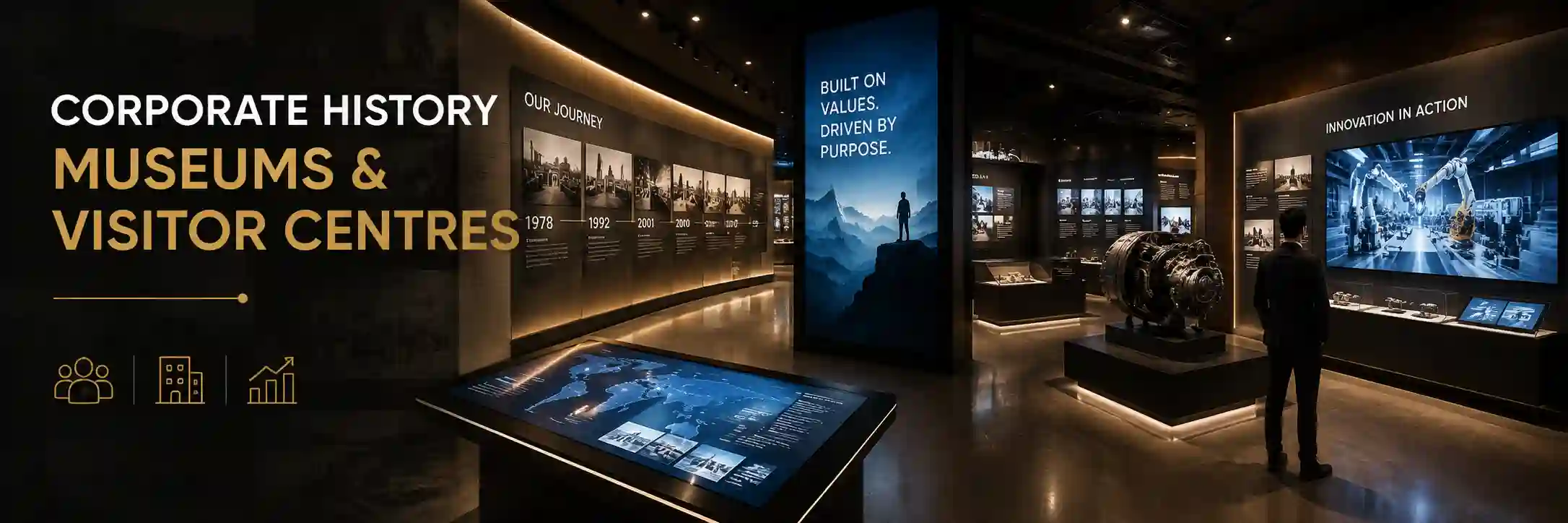
Beyond institutional museums, there's a growing category of work we do at Swaparichay Studios: corporate heritage spaces, founder story installations, and visitor centres for manufacturing plants, campuses, and corporate headquarters.
These serve a different audience employees, clients, institutional partners, investors but the design principles are the same. The goal is to create a story about the organization that people experience rather than read in a brochure.
For companies with a genuine history and a story worth telling, these spaces can be powerful brand assets. They communicate legacy, capability, and values in a way that no document does.
Working With a Museum Design Company in India
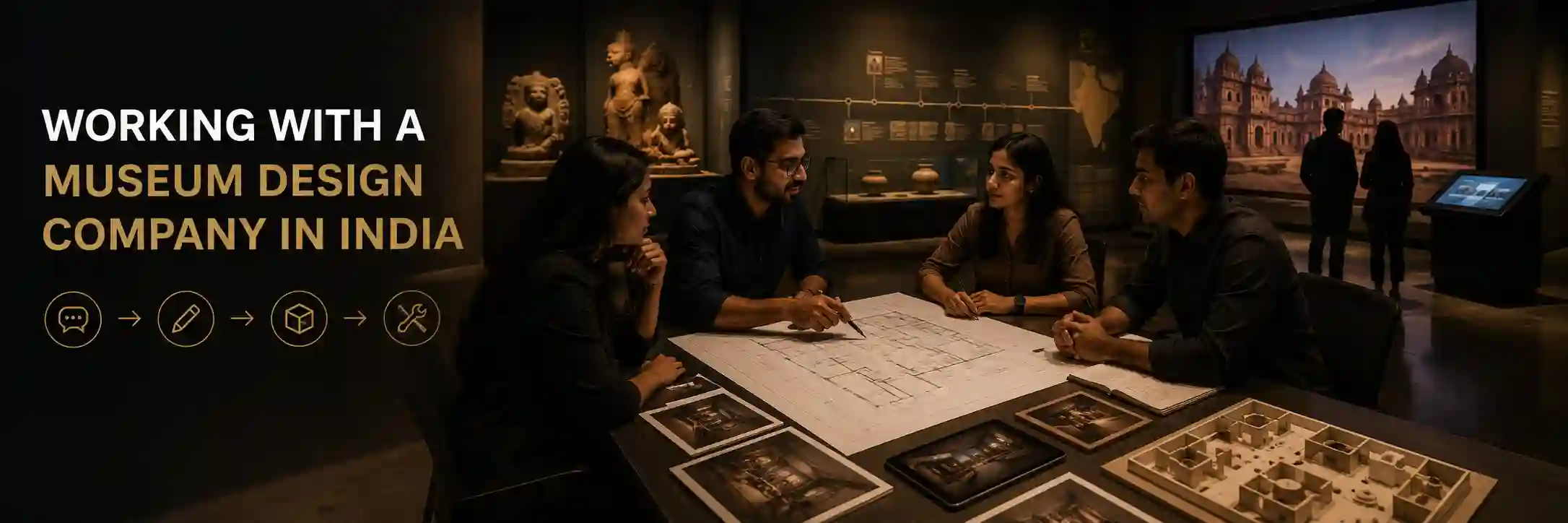
What separates good museum design from adequate museum design is the integration of content expertise and spatial design. Content experts know the story. Designers know how space and media carry stories. The best projects happen when both are working together from the beginning.
At Swaparichay Studios, we bring both conceptual and narrative development as well as full design, fabrication, and installation capability. If you're planning a museum, heritage space, visitor centre, or exhibition, the starting point is always the story you want to tell.
.png)
Comments