


Introduction
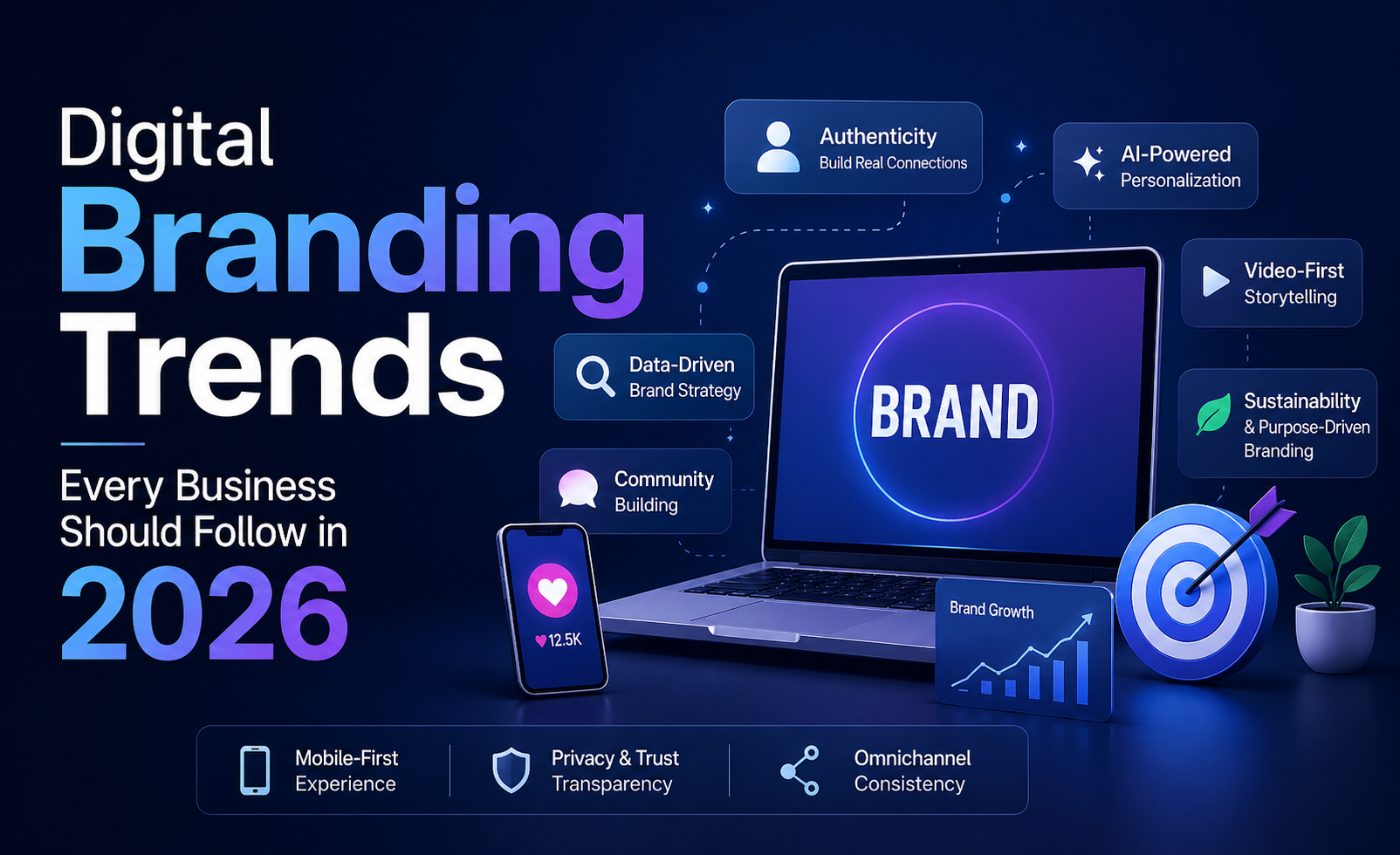
The digital branding landscape is evolving faster than at any point in the history of marketing. Technologies that were experimental two years ago are now mainstream. Platforms that barely existed five years ago are now where entire generations spend the majority of their media time. And consumer expectations shaped by the best brand experiences they have ever encountered are higher than ever.
For businesses that want to remain competitive and relevant in 2026, understanding and responding to these digital branding trends is not optional. It is the difference between brands that lead their categories and brands that perpetually play catch-up. Here are the most significant digital branding trends shaping the landscape in 2026.
Trend 1: AI-Augmented Brand Identity and Creative Production
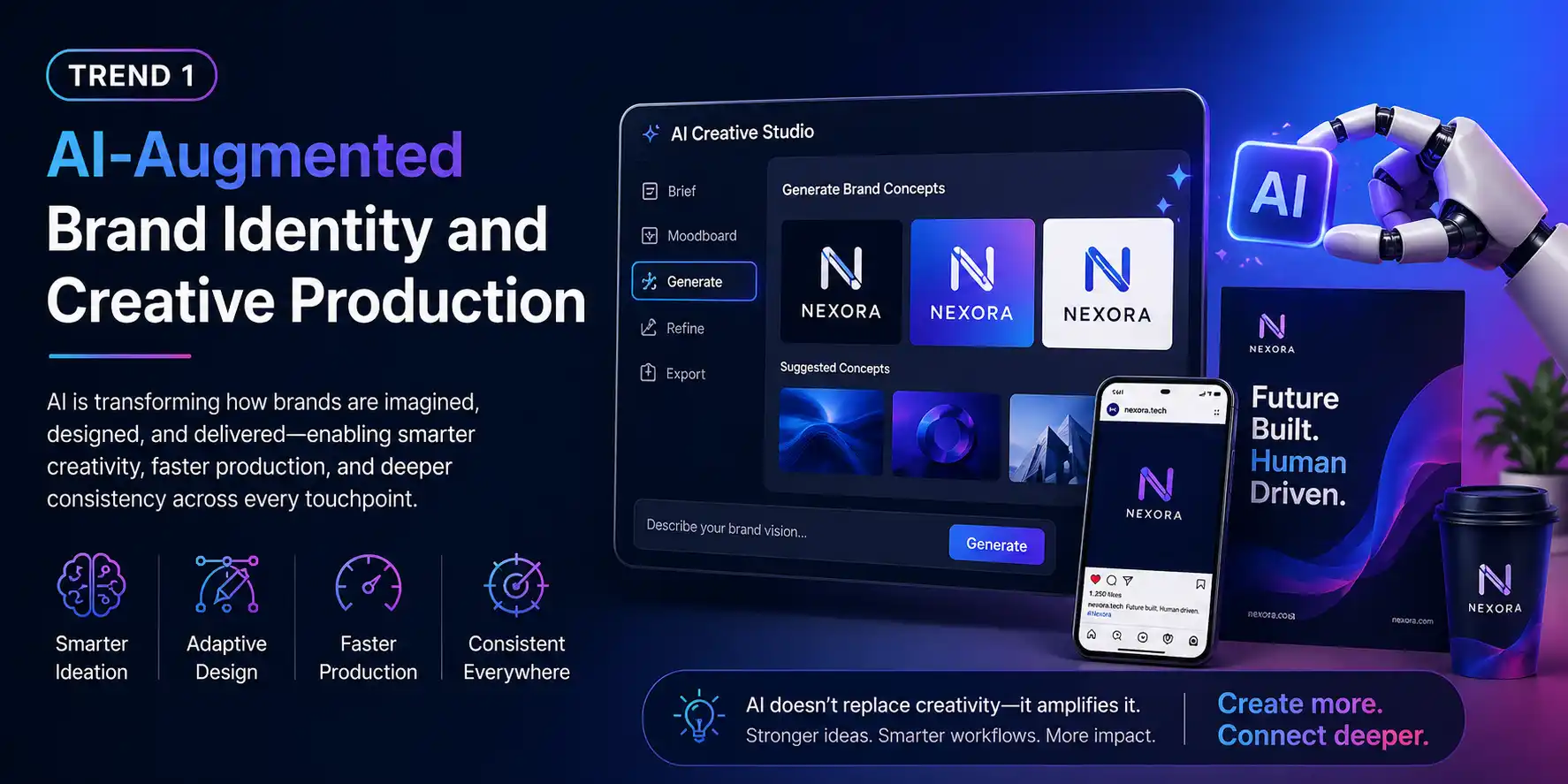
Artificial intelligence has fundamentally changed the economics and pace of creative production. In 2026, leading brands are using AI not to replace human creative direction but to dramatically accelerate execution, explore a wider range of creative options, and personalize brand experiences at scale.
How forward-thinking brands are applying AI to branding:
Generating multiple visual concept directions rapidly for faster strategic decision-making
Creating personalized visual content variations for different audience segments without proportionally increasing production costs
Using AI writing tools to maintain brand voice consistency across high-volume content production
Applying AI image generation for social media content, campaign imagery, and illustration
Automating brand compliance checking across large volumes of creative output
The brands winning with AI are those that use it within a framework of strong human creative direction. AI amplifies the creative vision; it doesn't replace the strategic thinking that defines what that vision should be.
Trend 2: Hyper-Personalization at Scale
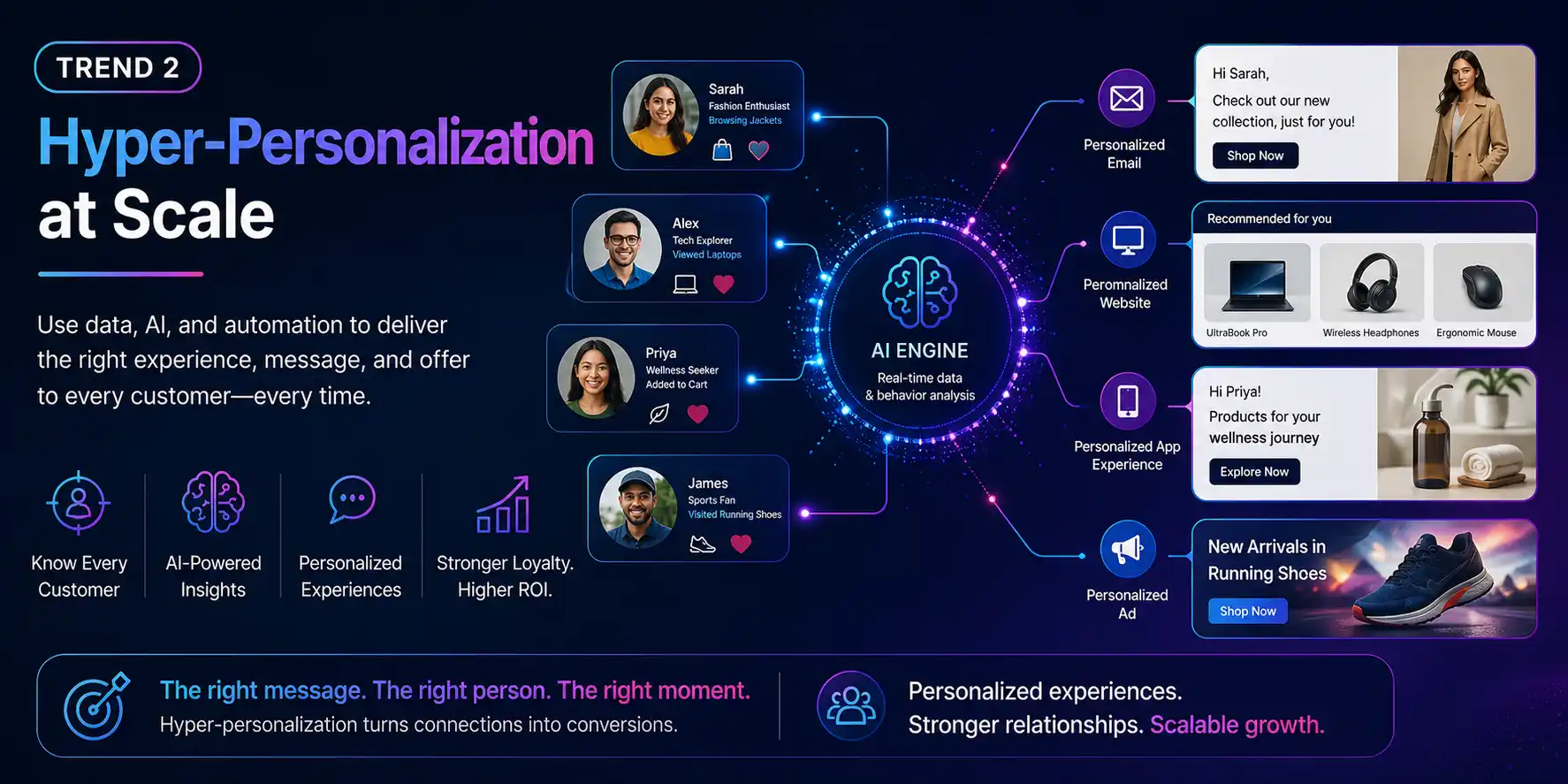
Consumers in 2026 expect brands to know them not in a surveillance-state way, but in a genuinely attentive, context-aware way. Hyper-personalization means delivering brand communications, content, and experiences that are specifically relevant to each individual, based on their demonstrated preferences, behaviour, and context.
This is being enabled by advances in first-party data collection and management, AI-driven personalization engines, and dynamic content technology that can generate unique experiences for each user. Brands applying this effectively see significantly higher engagement rates, conversion rates, and customer lifetime value metrics.
Practical applications of hyper-personalization in digital branding:
Dynamic website content that adapts to individual visitor behaviour, location, and history
Email campaigns that go beyond first-name personalization to adapt imagery, offer, and messaging based on individual customer journey stage
Social media advertising with creative that adapts to the specific interests and recent behaviour of each viewer
Product recommendation engines that feel genuinely personalized, not formulaic
Trend 3: Brand Authenticity and Values-Based Positioning
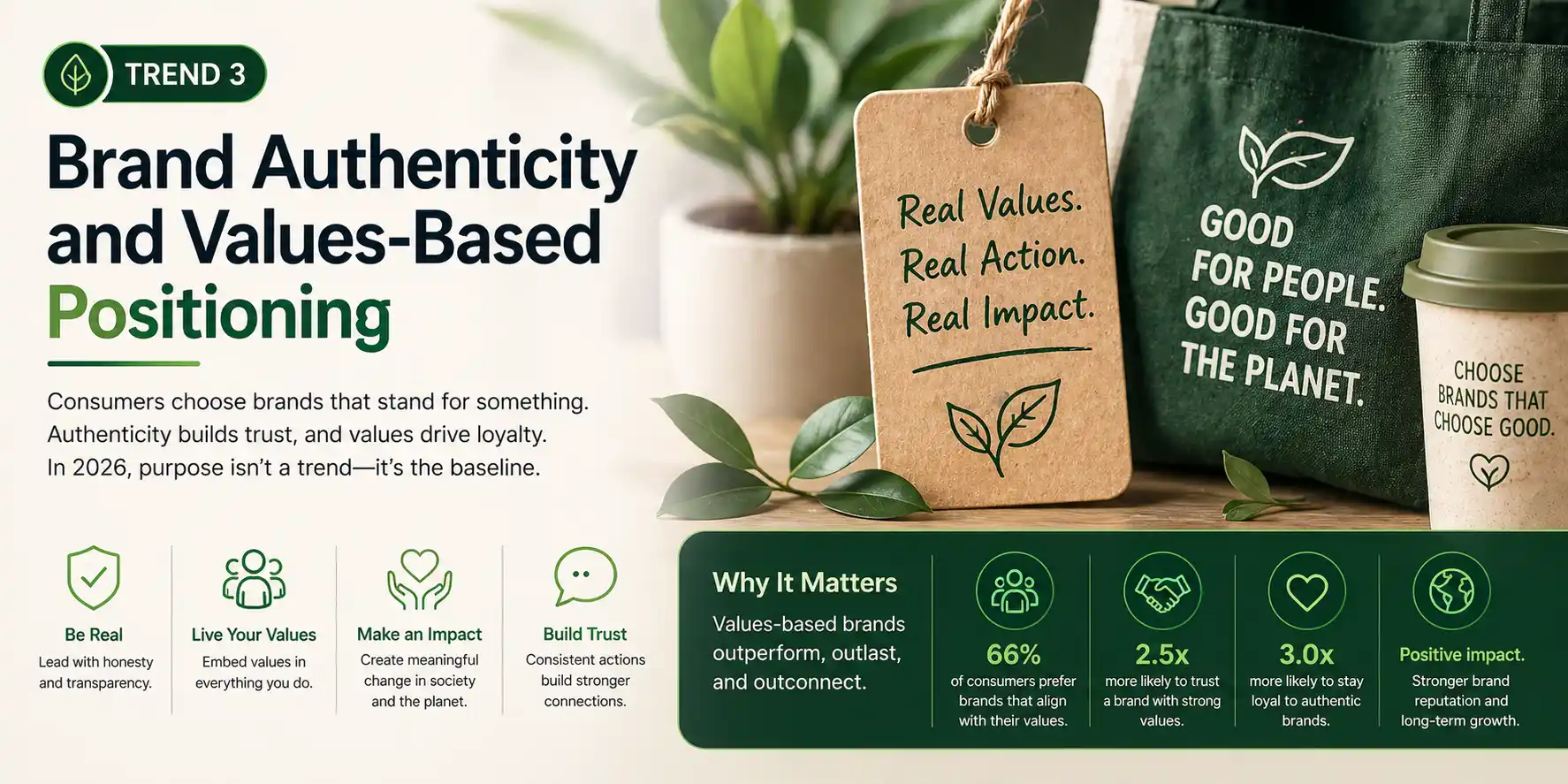
Consumer scepticism of traditional advertising and corporate PR is at an all-time high. The brands growing fastest in 2026 are those that demonstrate genuine authenticity that are who they say they are, do what they promise, and stand for things they genuinely believe rather than values adopted for marketing purposes.
This trend is particularly pronounced among Millennial and Gen Z consumers, who conduct sophisticated due diligence on brand claims and have powerful social platforms to amplify both positive and negative brand experiences. Brands that are caught engaging in 'greenwashing,' 'rainbow-washing,' or any form of values performance without substance face severe and rapid reputational consequences.
Authenticity in digital branding means:
Behind-the-scenes content that shows real people, real processes, and real challenges not just polished outcomes
Founder and team stories that humanise the brand at the human level
Transparent communication about both successes and failures
ESG (Environmental, Social, Governance) commitments that are specific, measurable, and verifiable not vague aspirations
Brand partnerships and collaborations that genuinely align with stated values
Trend 4: Short-Form Video as the Primary Brand Communication Channel
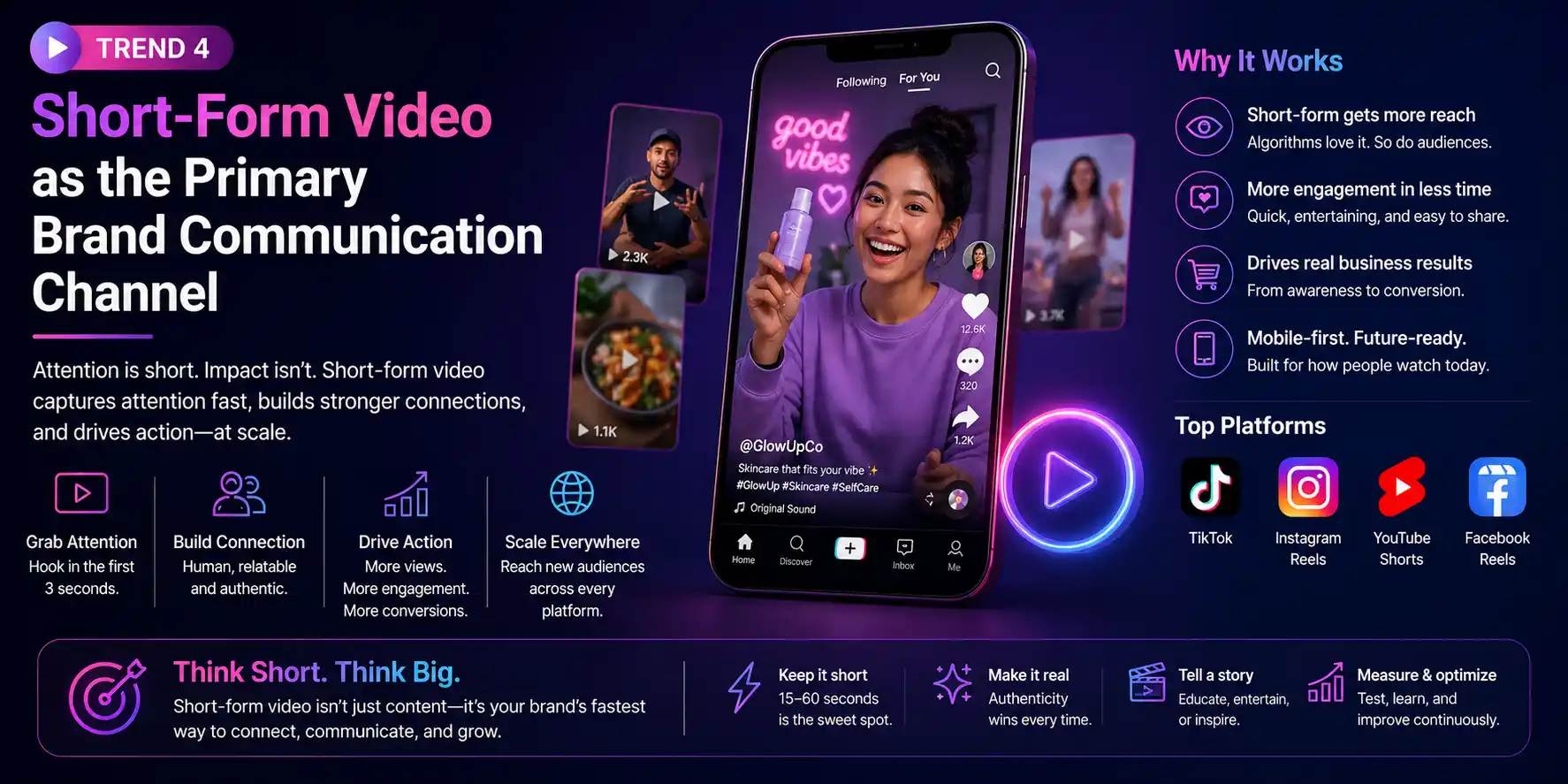
Short-form video led by TikTok and Instagram Reels has become the dominant content format for brand communication with audiences under 45. In 2026, brands that have not developed a genuine short-form video strategy are missing the most effective reach and engagement tool available in digital marketing.
The creative requirements of short-form video branding are different from traditional marketing:
Hooks must work within the first 1-3 seconds slower openings are scrolled past
Authenticity outperforms production value a genuine, lo-fi video from a founder often outperforms a polished studio production
Educational and entertaining content ('edutainment') consistently outperforms overtly promotional content
Trending audio and formats create discoverability on algorithm-driven platforms
Subtitles are essential the majority of short-form video is watched without sound
Brands that have mastered short-form video treat it as a genuine communication discipline with its own creative logic, not simply as a repurposing exercise for longer content formats.
Trend 5: Interactive and Immersive Brand Experiences
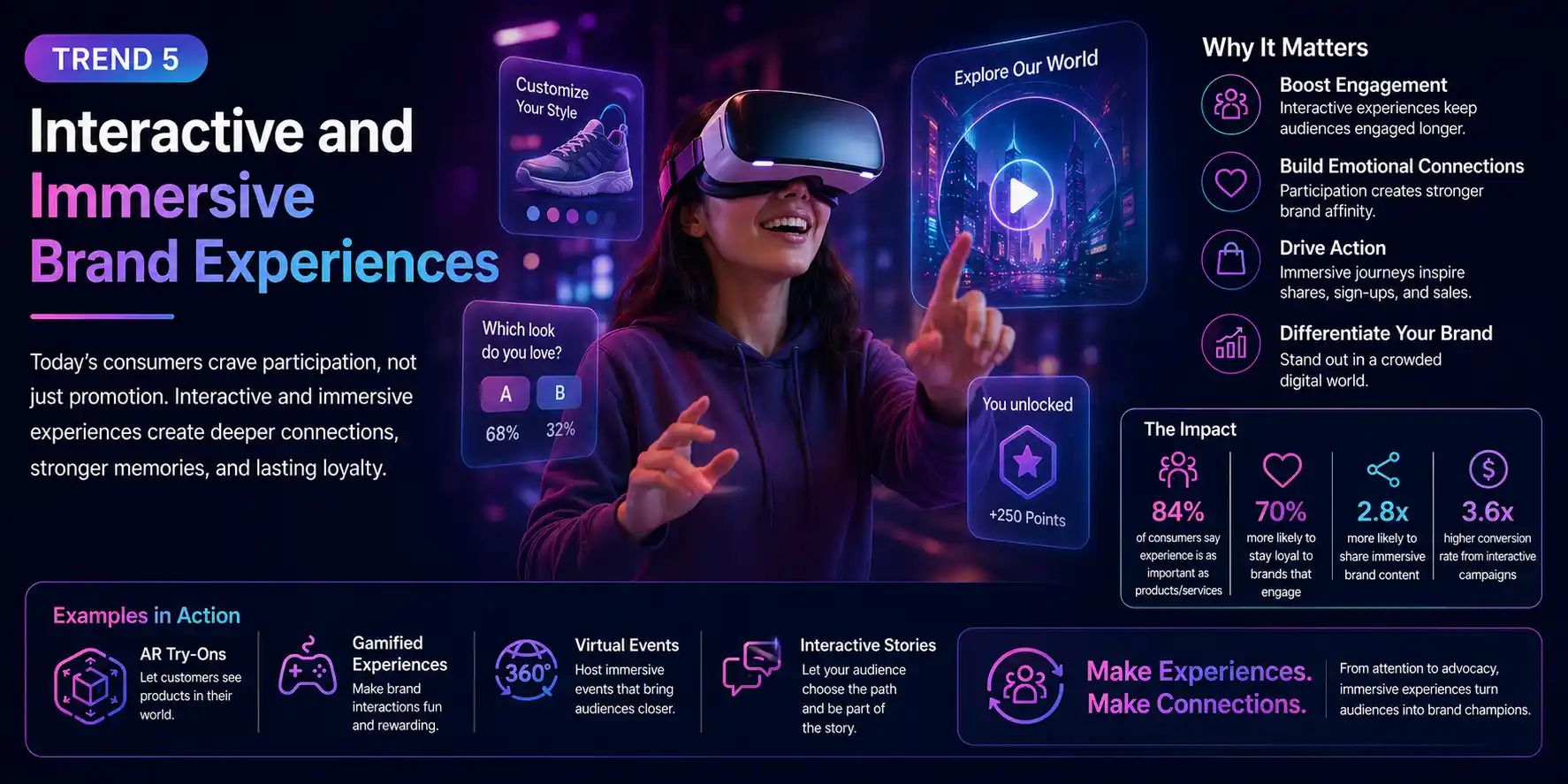
Static brand experiences a beautiful website that visitors passively scroll through are becoming less effective as audience expectations rise. In 2026, leading brands are building interactive and immersive experiences that invite active participation rather than passive consumption.
Examples of interactive branding in practice:
Augmented reality (AR) product try-ons that allow consumers to see how products will look in their home or on their person before purchasing major drivers of purchase confidence and reduction of return rates
Interactive brand storytelling that responds to user choices, creating a personalized narrative experience
Gamification elements in brand platforms that reward engagement and build habits around brand interaction
Virtual events and virtual showrooms that bring brand experiences to global audiences without physical presence requirements
Interactive data visualizations and configurators that invite exploration
Trend 6: Brand Community Building as a Core Strategy
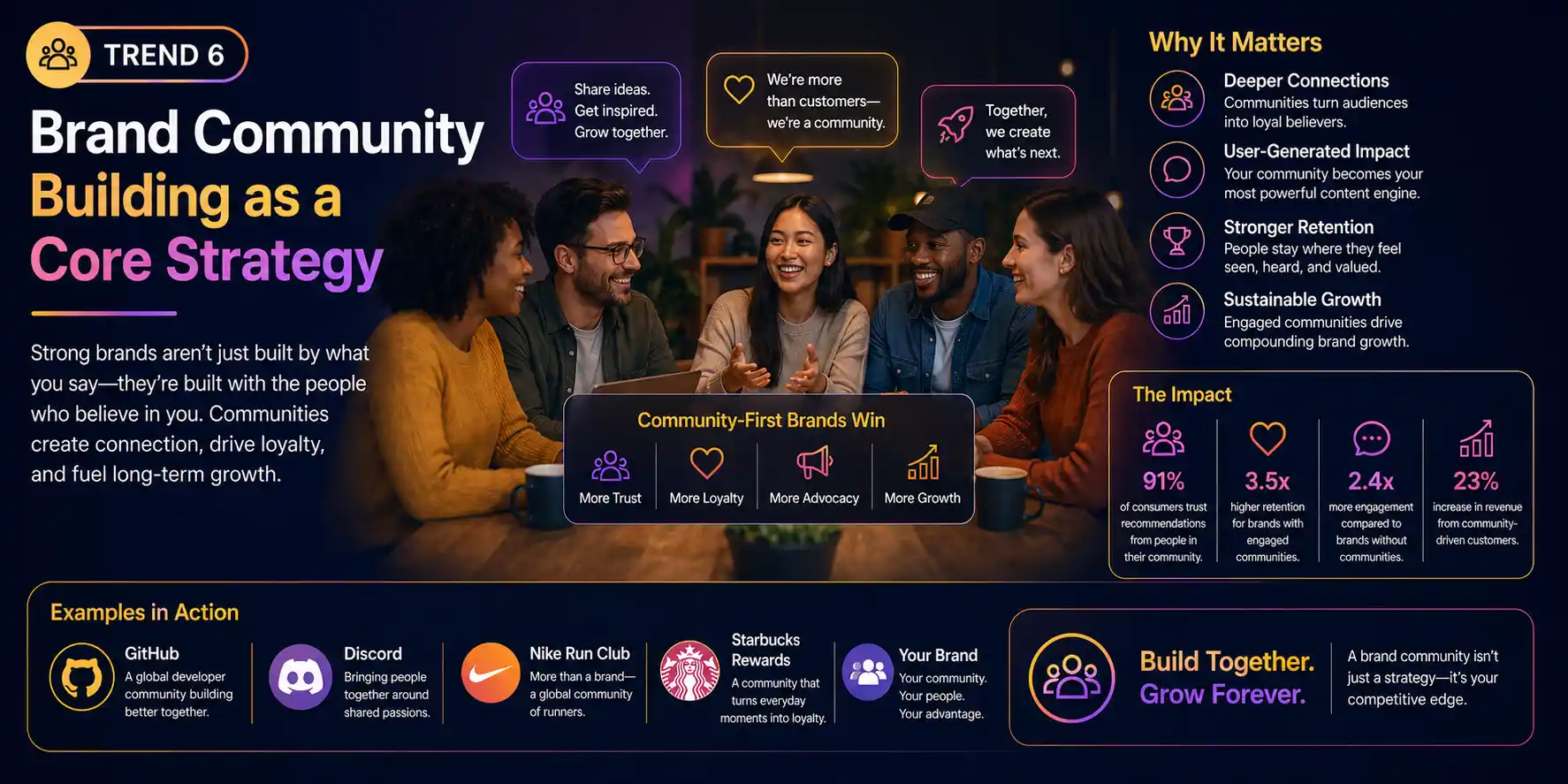
The most resilient brands of 2026 are building owned communities spaces where their most engaged customers connect with each other and with the brand directly, without dependence on third-party platform algorithms. The strategic logic is compelling: community members become brand advocates who recruit other members, have dramatically higher lifetime value than non-community customers, and provide a continuous stream of authentic content and insights.
Community-building platforms and approaches gaining traction:
Branded Discord servers for tech, gaming, and enthusiast brands
Exclusive email newsletters with community features (Substack, Beehiiv)
WhatsApp or Telegram channels for high-engagement, high-trust brand communication
Membership programmes that provide exclusive access and content in exchange for community participation
Brand-facilitated in-person events that reinforce community identity offline
Trend 7: Sonic Branding
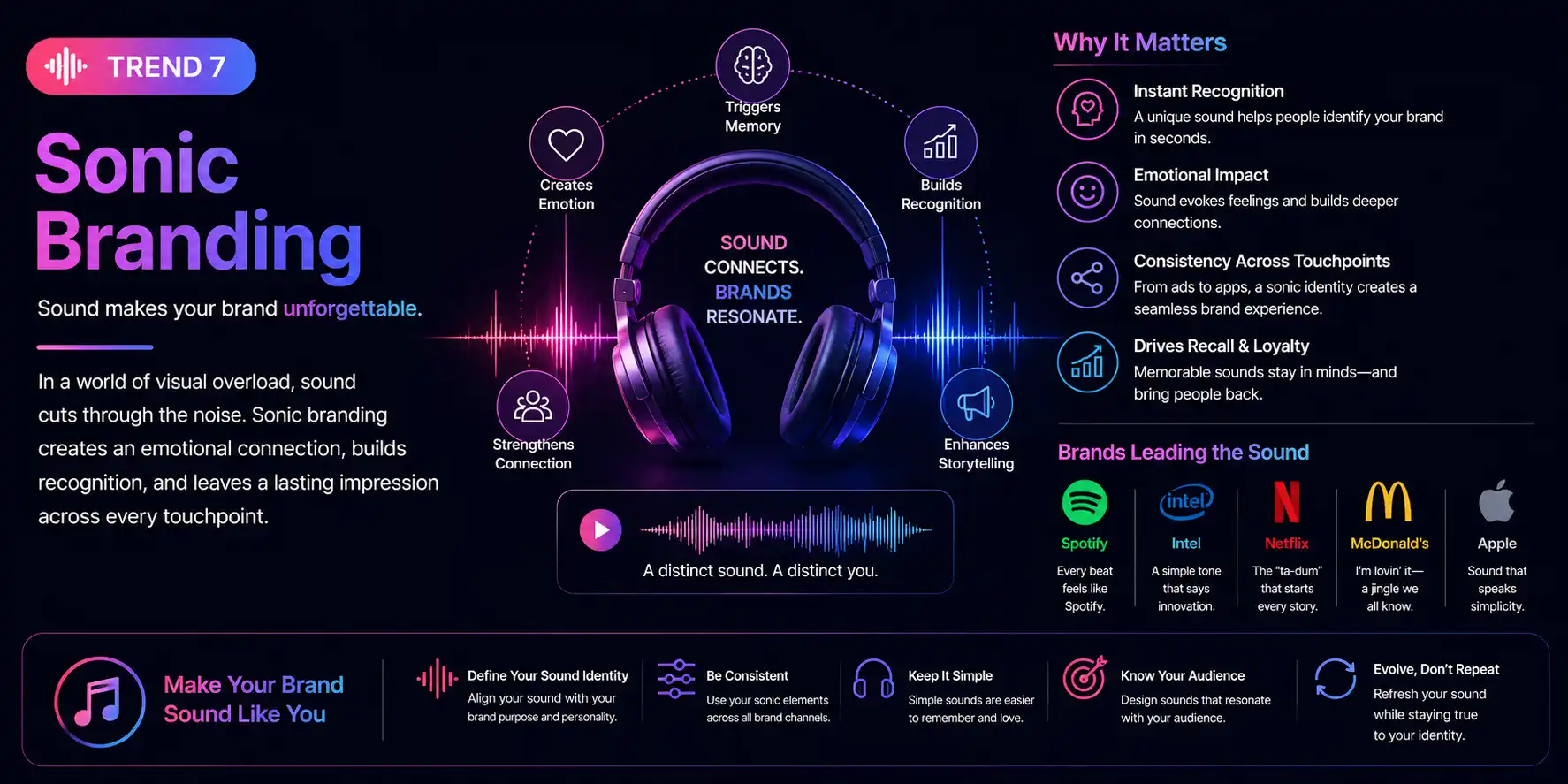
As audio-first formats (podcasts, voice search, smart speakers, streaming platforms) grow in cultural importance, forward-thinking brands are developing deliberate sonic identities the audio equivalent of a visual brand identity. Sonic branding encompasses:
Brand sonic logo: a short, distinctive audio mark that brands audio communications (like Intel's five-note signature or Netflix's 'ta-dum')
Brand sound palette: a broader set of sonic elements used consistently across audio touchpoints
Brand music guidelines: a defined musical territory that aligns with brand personality and informs content creation and licensing choices
Voice and tone guidelines for voice interface applications (Alexa skills, Google Assistant actions, etc.)
Trend 8: Sustainability and Purpose-Driven Brand Communication
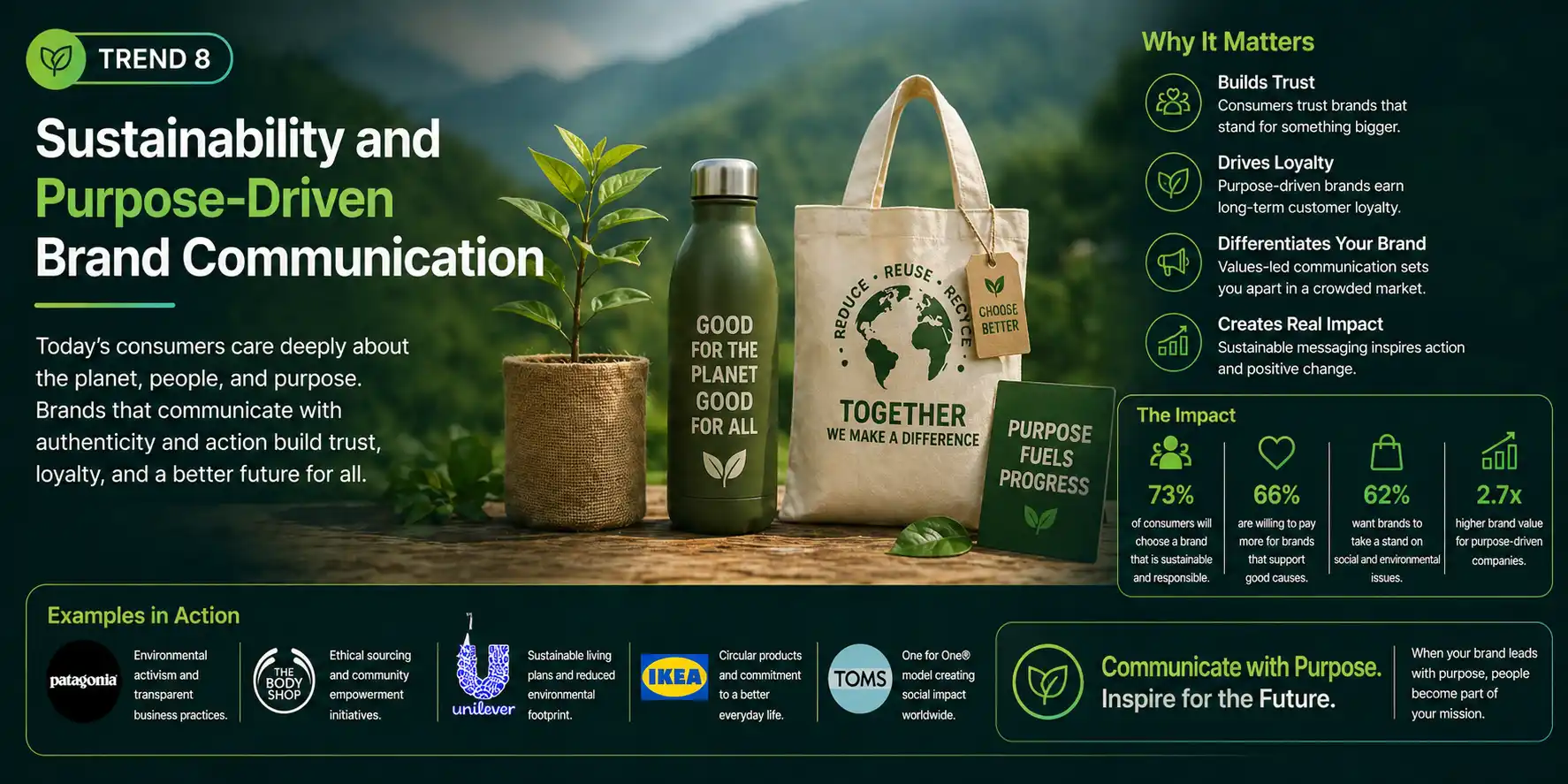
Consumer expectations around brand environmental and social responsibility have shifted from 'nice to have' to 'table stakes' for a growing proportion of purchase decisions. In 2026, how brands communicate their environmental and social commitments with specificity, honesty, and evidence is a major differentiator.
Effective purpose-driven brand communication in 2026:
Specific, measurable claims with third-party verification rather than vague aspirational language
Honest acknowledgement of areas where the brand is still working toward its goals
Integration of purpose into product and service communication, not just separate CSR content
Supply chain transparency that shows, not just tells, how products are made and by whom
Trend 9: Zero-Party Data and Privacy-First Brand Relationships
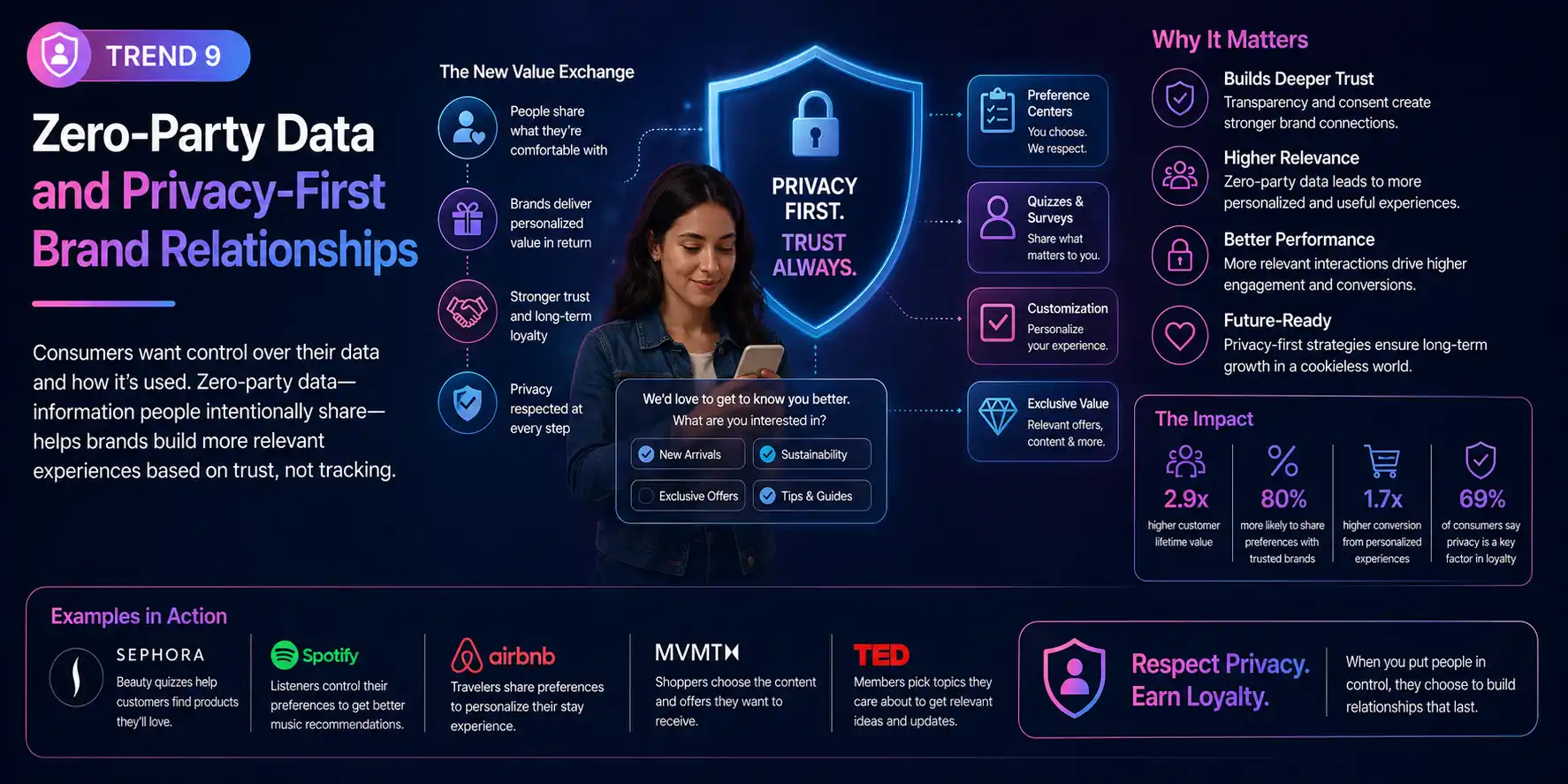
As third-party cookies have been phased out and consumers have become more privacy-aware, brands are building direct, permission-based relationships with their audiences to collect the zero-party and first-party data needed for personalization and targeting.
Zero-party data information that customers voluntarily share with brands is the most valuable and ethically sound data available. Brands are collecting it through:
Interactive quizzes, surveys, and assessments that deliver value to participants while gathering preference data
Preference centers that invite customers to tell the brand exactly what they want to hear about and how
Progressive profiling in email sequences that builds a richer picture of individual customer interests over time
Community participation that reveals interests, values, and needs organically
Conclusion
Digital branding in 2026 rewards brands that are genuine, interactive, personalized, and strategically future-oriented. The trends outlined here are not independent phenomena; they reinforce each other, with AI enabling personalization at scale, authenticity building communities, and communities generating the first-party data that enables more effective personalization.
The brands that navigate this landscape most effectively will be those that adopt a coherent strategic framework that selects the most relevant trends for their specific audience and category, rather than attempting to chase all of them simultaneously.
Ready to future-proof your digital brand strategy? Let's build a 2026 digital branding roadmap tailored to your business and get in touch today.

Comments