


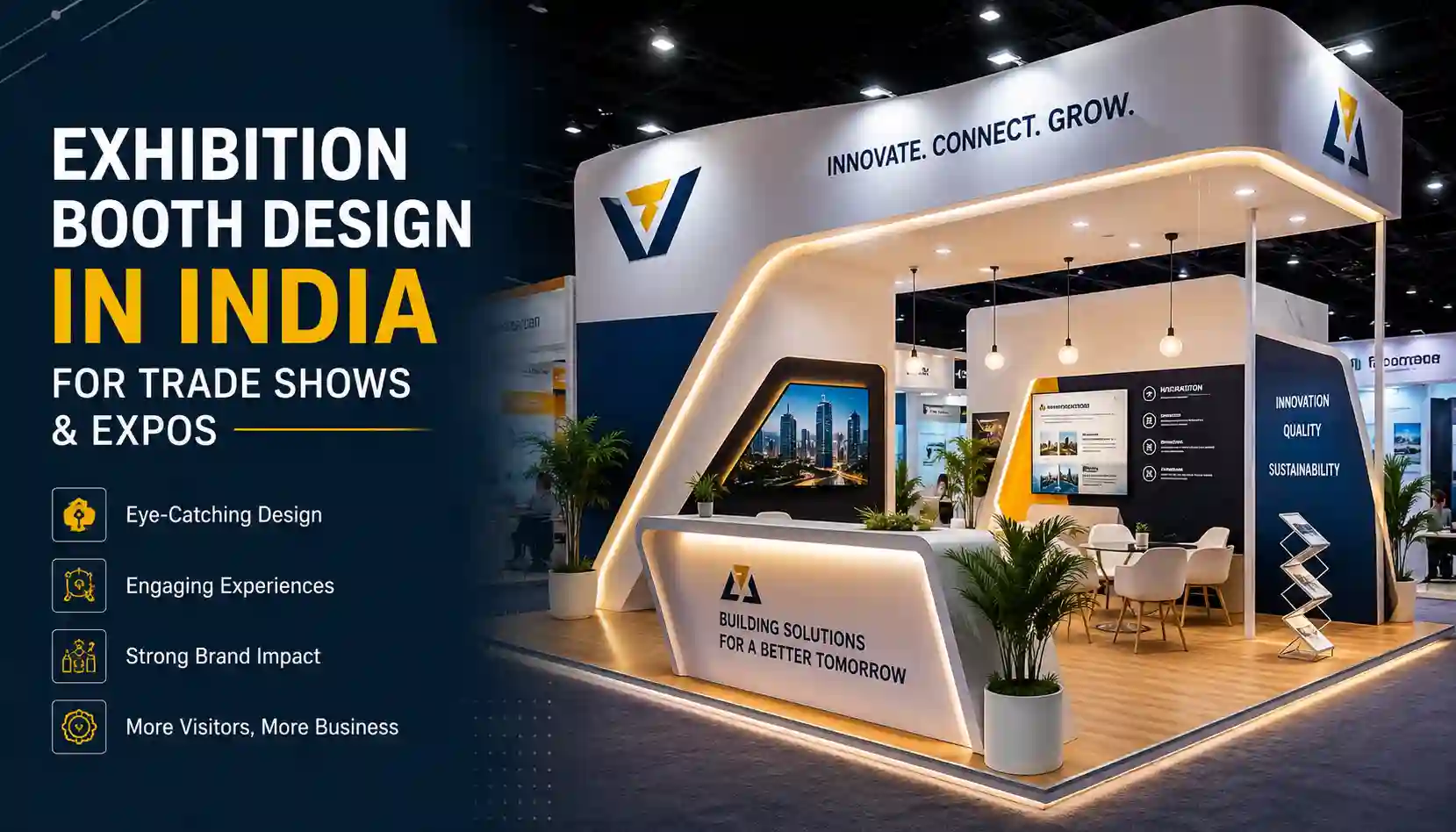
Walk through any major trade show in India ACETECH, Auto Expo, India International Trade Fair, or a sector-specific government expo and you'll notice something quickly. Most stalls look the same.
Backlit graphics, a reception counter, a few brochure holders, maybe a product display. Some have screens playing a corporate video on loop. A handful of staff, varying levels of engagement. The booth could belong to almost any company.
Then there are three or four stalls that have crowds. People are stopping, asking questions, pulling out phones to photograph. The company's name is being talked about. These stalls aren't necessarily the largest or the most expensive. They're the most designed.
The difference is intentional exhibition stall design versus assembled-from-catalogue booth building.
What Makes Trade Show Booth Design Work
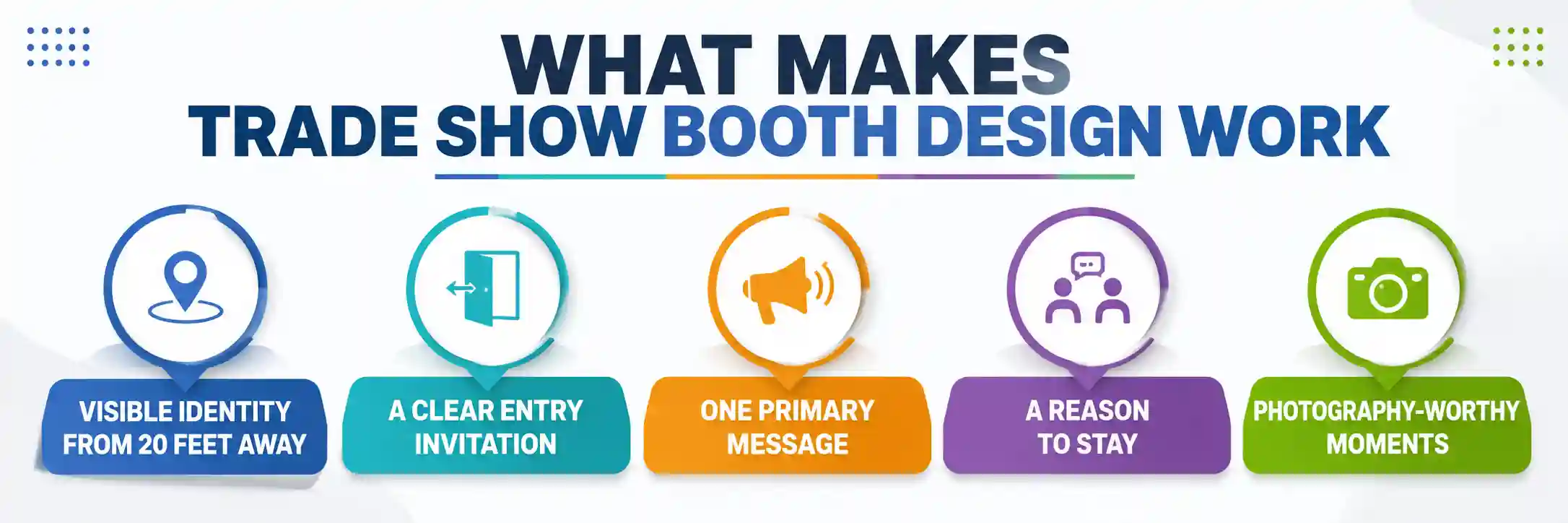
Visible identity from 20 feet away
Before someone reads a word of your content, they've already formed an impression from the visual mass of your stall. Color, scale, structure, lighting these create the impression at a distance. By the time a visitor is close enough to read your headline, they've already made a decision about whether you're worth stopping for.
Good trade show booth design in India starts with this question: what does our stall communicate before anyone is close enough to read it?
A clear entry invitation
The worst stalls are the ones with a full-width counter barrier at the front a physical wall between the staff and the visitors. The best stalls have an open entry point, a reason to step inside, and something interesting within the first few feet of the space.
One primary message
Stalls that try to communicate everything every product, every service, every market, every achievement end up communicating nothing. The best exhibition stall design picks one thing to lead with and makes everything else secondary.
A reason to stay
A demonstration, an interaction, a product experience, something that makes a visitor spend three minutes inside your stall rather than glancing and moving on. Dwell time is the metric that translates into conversations, which translates into leads.
Photography-worthy moments
In 2025, this matters more than it used to. If your stall produces no images worth sharing no interesting visual, no "wow" moment you're missing organic amplification. Design one element of the stall specifically to be photographed.
Exhibition Design for Government Expos and Pavilions
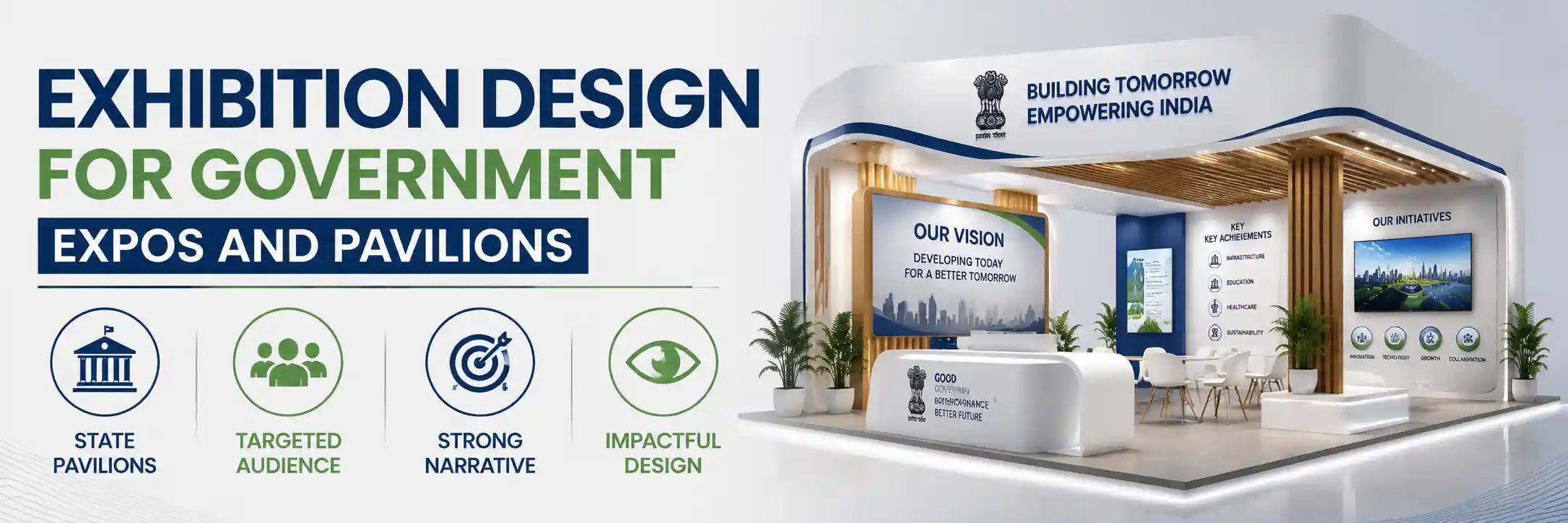
State pavilions and government sector exhibitions have their own specific requirements. The audience is different often policymakers, media, and institutional partners rather than general consumers. The content needs to reflect achievement, capability, and vision rather than just product features.
At Swaparichay Studios, we've designed for both commercial and government exhibition contexts. The government side requires a stronger narrative framework the story of what a scheme has achieved, what a department is building, what a state is working toward. The spatial design has to carry that narrative clearly.
The Fabrication Question: Modular vs Custom
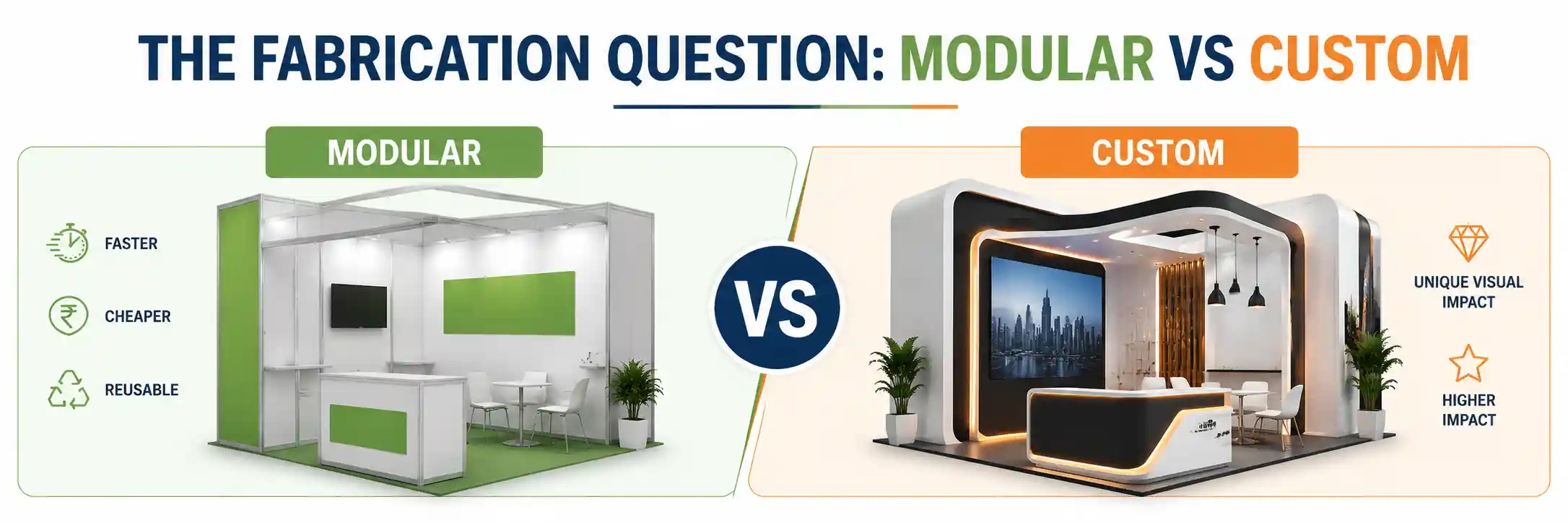
Modular stall systems are faster, cheaper, and reusable. Custom fabrication is more expensive and creates a unique visual impact. The right choice depends on budget, frequency of exhibition participation, and how differentiated you need to look.
For companies that exhibit frequently, a well-designed modular system with strong graphic content often makes more sense than custom builds for every show. For flagship participations the most important trade show of the year, a major government expo custom fabrication is usually worth the investment.
Our Approach at Swaparichay Studios
We're an exhibition design company with full-service capability: concept and creative, structural design, graphic production, fabrication, installation, and dismantling. We've worked across sectors manufacturing, technology, FMCG, government and at exhibitions ranging from small pavilions to large-format trade show presences.
What we focus on is the brief before we start the design: what does this company need visitors to think and do? Who is walking past this stall? What's the competitive context at this particular show? Those answers shape the design.
If you're planning a trade show participation and want the stall to actually do something attract visitors, hold attention, generate leads start the conversation with us early. Good exhibition booth design takes time. The companies that get it right aren't the ones who brief their design agency two weeks before the show.


Comments