



Introduction
Think about the brands you keep coming back to. It might be the way a website makes shopping easy, the packaging that feels thoughtfully designed or the customer support that resolves a problem without unnecessary hassle. These small details often shape how people feel about a business.
This is where brand experience design makes a difference. A logo may help customers recognise your business but their overall experience determines whether they remember it positively and choose it again.
Today customers interact with brands across websites, social media, advertisements, packaging and customer service. When these interactions feel connected and consistent, they help build trust and encourage long-term relationships.
For businesses that want to grow in competitive markets, branding should go beyond visual identity. It should create an experience that customers recognise, value and want to return to.
What Is Brand Experience Design?
Brand experience design is the process of shaping how customers perceive and interact with a business at every stage of their journey.
It combines visual identity, messaging, digital design, packaging and customer interactions to create a consistent impression of the brand.
For example, imagine a skincare brand with elegant packaging and a professional website. If the product arrives in damaged packaging or customer support fails to respond, the experience feels disconnected from the brand's promise.
On the other hand, when the website, packaging, product quality and customer service work together, customers are more likely to develop confidence in the business.
In simple terms, brand experience design ensures that what a brand promises matches what customers actually experience.
Why Brand Experience Matters More Than Just a Logo
A logo is an important part of branding, but it cannot communicate everything about a business on its own. Customers form opinions through repeated interactions rather than a single visual element.
Here are four reasons why brand experience deserves attention.
1. It Builds Customer Trust
Customers want to know that a business will deliver what it promises. Consistent messaging, clear information and reliable service help establish that confidence.
When a brand communicates professionally across its website, social media and other channels, customers receive a more coherent impression of the business.
2. It Makes Your Business Memorable
A distinctive experience gives customers something to remember beyond a product or service.
This could be a recognisable visual style, thoughtful packaging, a useful website or a personal approach to customer service.
The aim is not to make every interaction complicated. It is to make important interactions meaningful.
3. It Encourages Repeat Purchases
A positive experience can give customers a reason to return. When people find a brand reliable and easy to interact with, they may be more willing to purchase again and recommend it to others.
Of course, loyalty also depends on factors such as product quality, pricing and customer needs. Branding works best when the actual experience supports the expectations it creates.
4. It Helps Your Business Stand Out
Many businesses offer similar products or services. A clear brand identity combined with a thoughtful customer experience can help customers understand why your business is different.
Instead of competing only on price, you can build recognition around your approach, values and the quality of your interactions.
6 Ways to Create a Memorable Brand Experience
Building a strong brand experience does not always require a complete rebrand. Often, it starts with improving the details customers interact with every day.
1. Create a Consistent Visual Identity
Your logo, colours, typography, imagery and graphic elements should work together across all platforms.
A customer visiting your website should be able to recognise the same brand when they see your Instagram page, product packaging or business presentation.
Consistency does not mean using identical designs everywhere. It means maintaining a recognisable identity while adapting to each platform.
2. Develop a Clear Brand Voice
The way you communicate is just as important as how your brand looks.
Decide whether your brand should sound professional, friendly, bold or informative. Then apply that tone across website copy, social media posts, emails and customer communications.
Avoid changing your messaging so frequently that customers struggle to understand what your business stands for.
3. Make Your Website Easy to Use
Your website is often one of the first places potential customers learn about your business. A confusing layout or unclear service information can create unnecessary friction.
Focus on simple navigation, readable content, mobile responsiveness, fast loading pages and clear calls to action.
A good website should help visitors understand what you offer and what they should do next without making them search for basic information.
4. Design Packaging That Reflects Your Brand
For product-based businesses, packaging is part of the customer experience.
Thoughtful packaging can communicate quality, personality and attention to detail. Even small choices such as material, typography and the arrangement of information can influence how a product is perceived.
The design should also suit the product, protect it properly and remain practical for customers.
5. Keep Your Social Media Experience Connected
Social media should feel like an extension of your brand rather than a collection of unrelated posts.
Use consistent visual elements, relevant content and messaging that reflects your business values. More importantly, respond to customer questions in a way that matches your brand personality.
A well-designed feed can attract attention, but useful content and genuine communication help maintain interest.
6. Improve the Experience After Purchase
Brand experience does not end when a customer makes a payment.
Order updates, onboarding instructions, after-sales support and follow-up communication can influence whether customers feel confident about their decision.
Ask customers for feedback and look for recurring problems. Small improvements to these interactions can make a meaningful difference over time.
How Brand Experience Design Builds Customer Loyalty
Customer loyalty develops when people have good reasons to continue choosing a business. Brand experience supports this process by making interactions familiar, reliable and valuable.
Consider a customer who discovers a business through social media. They visit its website, understand the service clearly and receive a helpful response to their enquiry. After making a purchase, they receive reliable support.
Each interaction reinforces the same impression. Over time, the customer may become more comfortable returning to that business because the experience has met their expectations.
Businesses can strengthen this process by focusing on three areas:
Recognition: Customers can identify the brand across different channels.
Reliability: The business consistently delivers on its promises.
Relevance: Products, services and communication address real customer needs.
These elements work together. A visually attractive brand may gain attention, but a reliable and relevant experience gives customers stronger reasons to stay.
How to Measure the Success of Your Brand Experience
Brand experience should not be judged by appearance alone. Businesses can track practical indicators to understand whether their branding efforts are helping customers.
Choose metrics that match your business goals. For example, a service-based company may focus on enquiry quality, client retention and referrals while an e-commerce brand may pay closer attention to repeat purchases and checkout conversions.
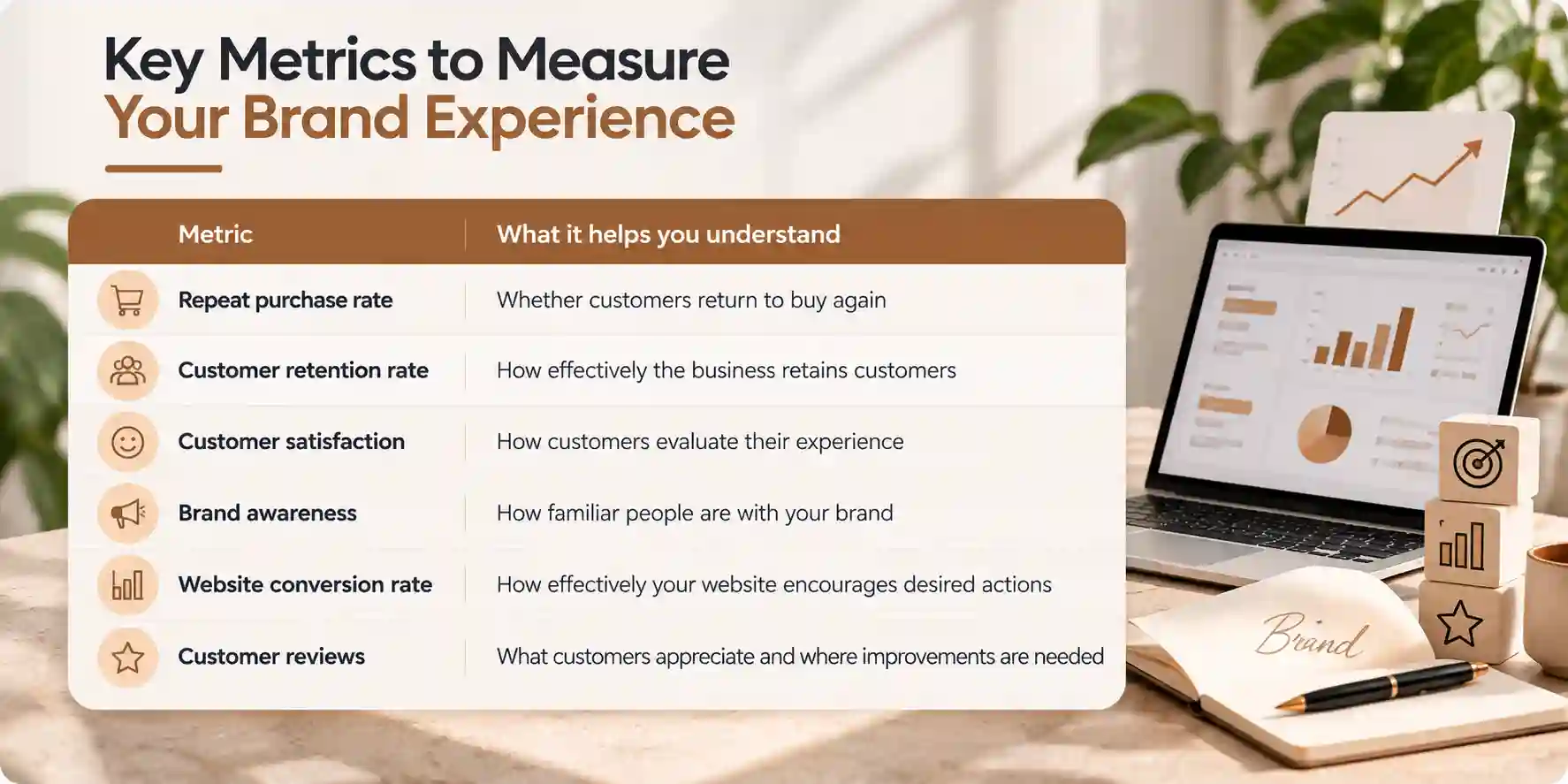
Review these indicators regularly and use customer feedback to identify areas that need improvement.
How to Choose the Right Branding Agency for Your Business
Creating a consistent brand experience requires strategic thinking as well as creative execution. This is where a professional branding agency can help.
When searching for the Best Branding Agency in India, look beyond attractive portfolios. Consider whether the agency understands your audience, business objectives and competitive landscape.
Here are a few things to evaluate:
Strategic approach: Does the agency understand your positioning, target customers and business goals before suggesting designs?
Creative capabilities: Can it develop a distinctive identity that reflects your brand rather than simply following trends?
Digital expertise: Can it connect branding with website design, social media and other digital touchpoints?
Consistency: Does it provide brand guidelines that help your team maintain a recognisable identity?
Communication: Does it understand your requirements and explain its recommendations clearly?
Businesses looking for the Best Branding Agency in Lucknow should also consider local market understanding, accessibility and the ability to develop a brand that connects with the right audience while remaining relevant beyond the local market.
The right agency should understand that branding is not just about producing creative assets. It is about helping a business communicate its value and create a consistent impression across customer interactions.
How Swaparichay Studios Approaches Branding
At Swaparichay Studios, branding is an opportunity to help businesses communicate what makes them different.
A strong brand begins with understanding the business, its audience and the impression it wants to create. From there, visual identity, creative design and digital experiences can work together to communicate a consistent message.
Whether a business needs a new identity or wants to improve its existing brand presence, the focus should remain on clarity, recognition and meaningful customer interactions.
The goal is to create branding that does more than attract attention. It should help customers understand the business, recognise its value and feel confident engaging with it.
Conclusion
A memorable brand is built through more than a logo. It develops through the experiences customers have when discovering, evaluating, purchasing from and interacting with a business.
Brand experience design brings these interactions together through consistent visuals, clear communication, thoughtful digital design and reliable customer support. When these elements work well, they can strengthen recognition, improve customer confidence and support long-term loyalty.
For businesses looking to grow, the next step is to review the complete customer journey and identify where the experience can be improved.
Looking to build a stronger brand identity? Connect with Swaparichay Studios to explore how thoughtful branding and creative design can help your business create a more consistent and memorable brand experience.
Frequently Asked Questions
1. What is brand experience design?
Brand experience design is the process of shaping customer interactions across visual identity, websites, packaging, communication and customer service to create a consistent brand impression.
2. How does branding improve customer loyalty?
Branding can support customer loyalty by building recognition, trust and emotional connections. When a brand delivers a consistent experience and meets customer expectations, people have more reasons to return.
3. What is the difference between brand identity and brand experience?
Brand identity includes the visual and verbal elements that represent a business, such as its logo, colours, typography and tone of voice. Brand experience covers how people perceive and interact with the business across different touchpoints.
4. Why should a business invest in professional branding?
Professional branding helps businesses communicate their value clearly, establish a recognisable identity and maintain consistency across marketing channels. Its impact depends on how well the branding aligns with the actual customer experience.
5. How do I choose the best branding agency in India?
Evaluate an agency's strategic approach, portfolio, industry understanding, creative capabilities and ability to maintain consistency across digital and offline touchpoints. Choose a partner that understands your business goals rather than focusing only on visual design.
6. Can a branding agency in Lucknow help businesses reach a national audience?
Yes. A branding agency in Lucknow can help businesses develop a professional identity, clear positioning and consistent digital presence for customers across India. The results also depend on the business strategy, marketing execution and customer experience.


Comments