About the Project
The Raja Shankar Shah Museum in Bhopal, Madhya Pradesh is all about Raja Shankar Shah, who lived during the British rule. This museum is inside the palace where he was held and executed by the British in 1857. Inside, you'll see paintings, weapons, sculptures, and other things linked to Raja Shankar Shah and his fight against the British.
This museum is the only one in India that sheds light on Raja Shankar Shah's life. He was the king of the Garha Kingdom and led a rebellion against the British in Jubbulpore in 1857, which ultimately led to his execution, along with his son.
Above is a brief overview of the museum that stands complete with authentic Gond art, literature and history painted and adorned on every square inch of its walls.The demand was to design and execute the said artwork and literature for the Raja Shankar Shah museum and in the next segment, we have mentioned what we proposed.
Solutions Proposed / Services Offered
The design of such a big scale required both expertise in design as well as in research. Therefore, we proposed the following services: Graphics Designing, Walls Color, Caricature, Gond Arts
-
STRATEGYResearch & Development, UI/UX Strategy
Initial Drafts / Work in Progress /
The biggest challenge that we faced was the lack of resources on the leader and the mastermind behind the Gond mutiny, Raja Shankar Shah. After deep research and hours of brainstorming we decided to showcase the history of Raja Shankar Shah and his dynasty in five galleries.
Gallery 1:
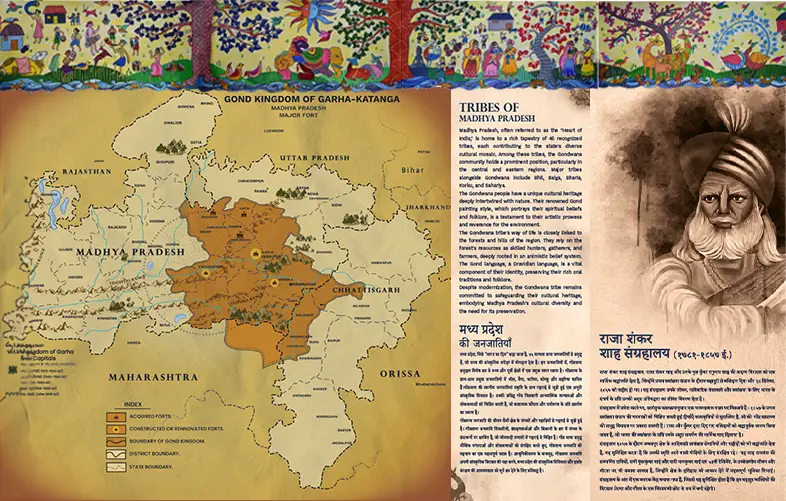
The first gallery was to be decorated in the history and culture of the Gond tribe. The research revealed a bright and colourful Gond culture rich in art and music. All these findings were then converted into colourful artforms to be placed in the First Gallery. Here are a few elements that we used in the artwork:
- The royal sigil: Lion Hunting and Elephant.
- The Sun & Moon depicting eternal servitude towards nature.
- Raja Shankar Shah & Rani Phulkunwar Bai (his wife) & Rani Avanti Bai.
- Kunwar Raghunath Shah & Rani Man Kunwar Bai (his wife).
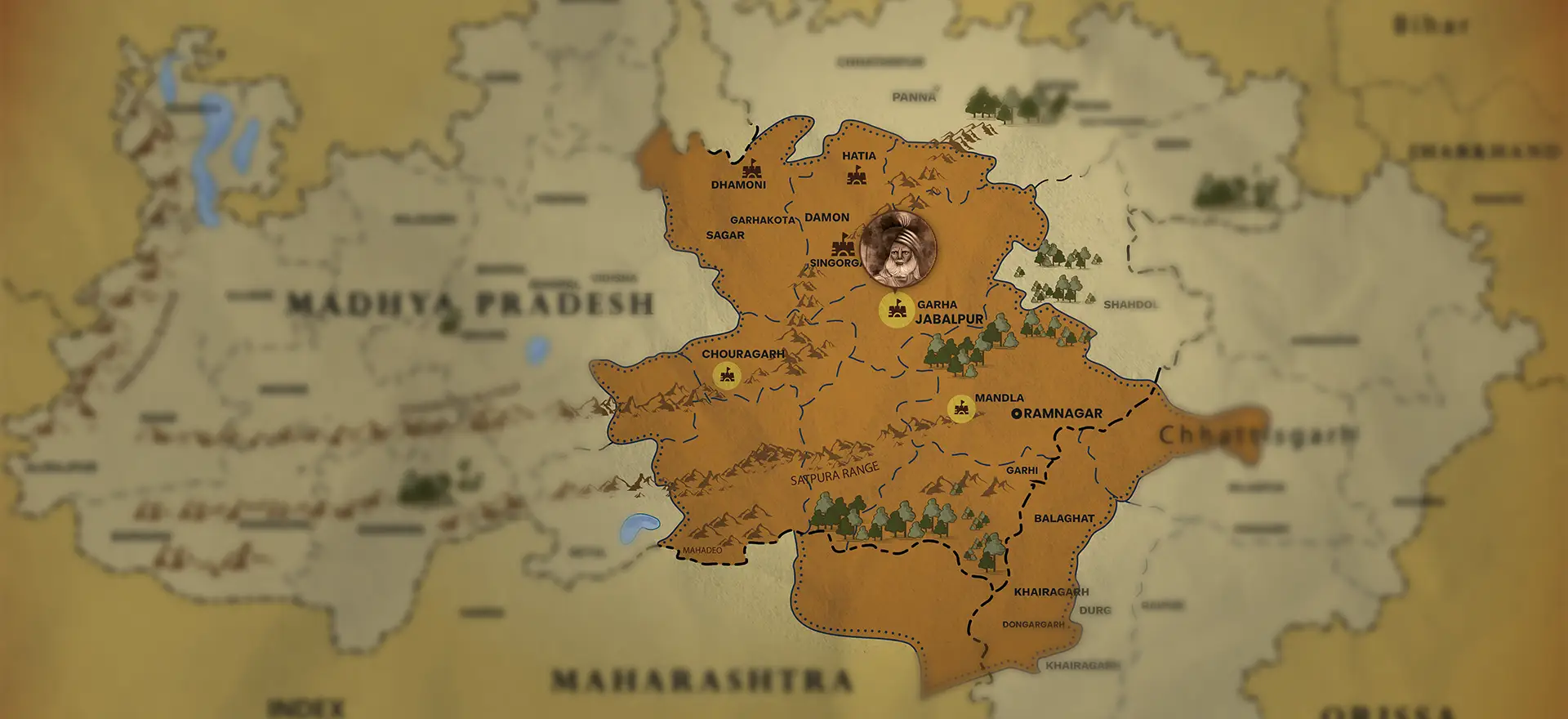
- The map of the Gondwana kingdom.
Besides this we also planned to depict the following artefacts
Gallery 2
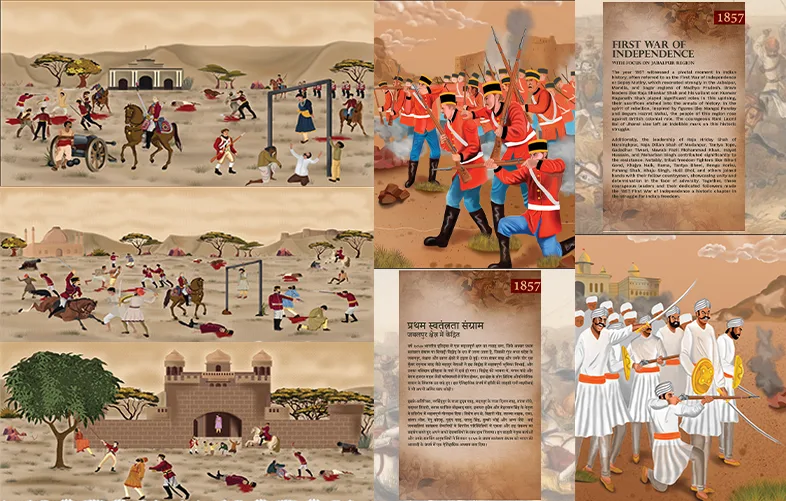
The second gallery houses the iconic struggle for Independence shedding light on the origin of the mutiny, the martyrs and other events. All these were designed by hand on paper as rough drafts for the final artwork that will forever narrate the contribution of the Gond community in India’s first struggle for Independence.
Gallery 3
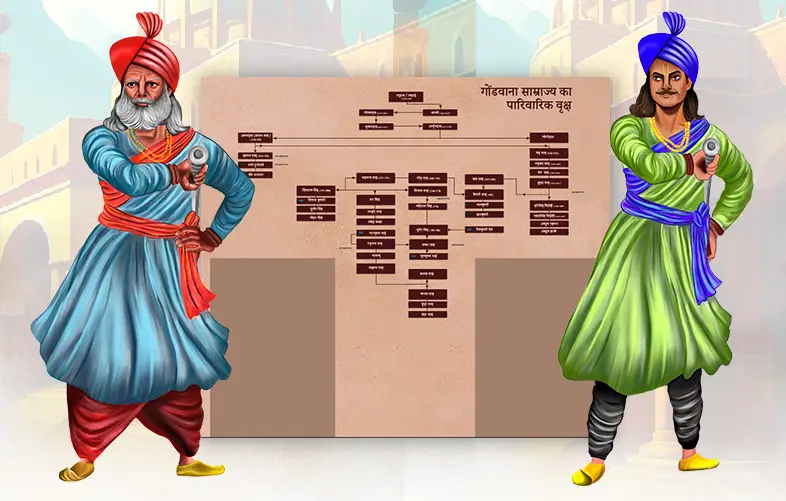
The third gallery was devoted to the lives of Raja Shankar Shah & Kunwar Raghunath Shah who were mostly involved in the uprising in Jabalpur to free the country from the then East India Company. The walls would also showcase their family tree which is glorified by fierce rulers whose names are synonyms of courage and bravery even today. Hand made sketches based on authentic resources were also drafted to be placed within this gallery.
Gallery 4
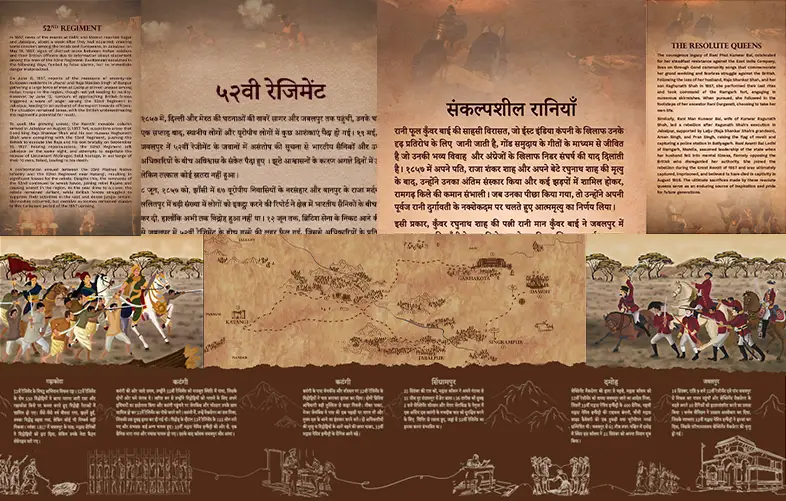
The walls of the fourth gallery were dedicated to the lady leaders of the Gond community Rani Phulkari Bai, Rani Avanti Bai, Rani Jhalkari Bai and others who with the support of the local residents stood up to the 52nd Bengal Regiment. Each artwork speaks of the fierceness with which these queens revolted against the company rule.
Gallery 5
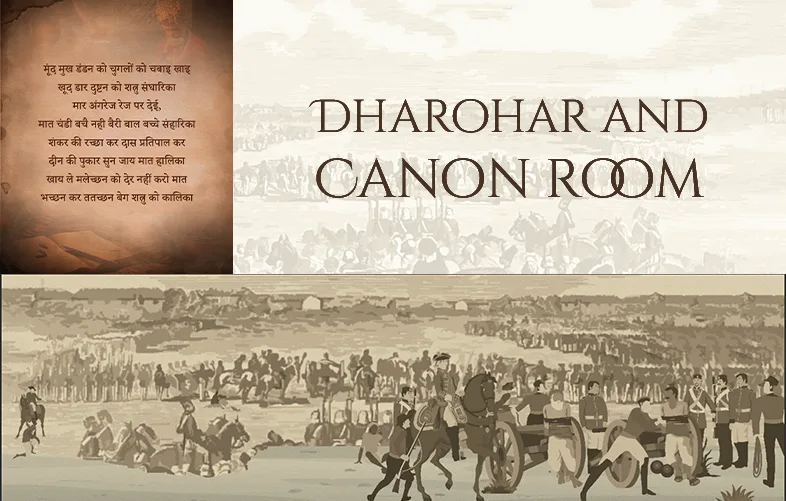
The final gallery voices the unspoken gallantry of a father and a son who sacrificed themselves to fuel the rebellion against the foreign rule in their motherland. The room was to host the cannon which was used to execute Raja Shankar Shah and his son Raja Kunwar Shah. Along with this, a poem on the Goddess Chandi sings the glory of the martyrs that inspires patriotism in every soul